
Free shipping over $1,000 How delivery works
Best price guarantee on every sauna How it works
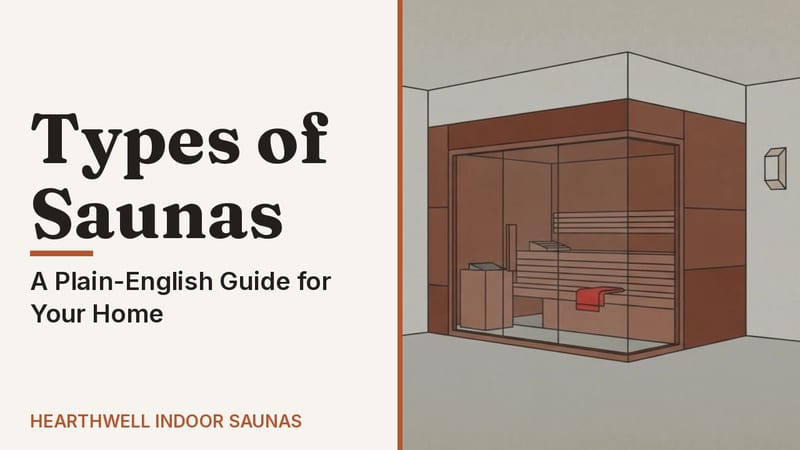
The four main types of saunas, traditional, infrared, steam room and hybrid, compared on heat, humidity, space and power, with an honest pick for most homes.

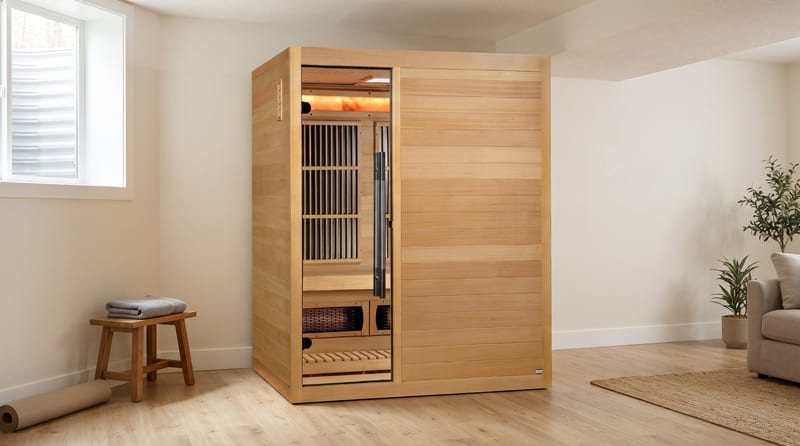
There are four main types of saunas, sorted by how they make heat: traditional stove saunas (electric or wood-fired) that heat the air and a pile of stones, infrared saunas that warm you with heater panels, steam rooms that fill a sealed room with wet steam, and hybrids that pair a stove with infrared panels. Barrel, outdoor and portable saunas are shapes and places rather than separate kinds of heat.
Which one suits your house comes down to how hot you like it, whether you want steam, and what your wiring and floor can take. Below I go through the different types of saunas one by one, with real numbers from published studies and from the makers’ spec sheets for the home saunas we carry.
Here is the quick comparison. The figures come from the North American Sauna Society, a 2018 systematic review of sauna studies, and the makers’ spec sheets for our own range.
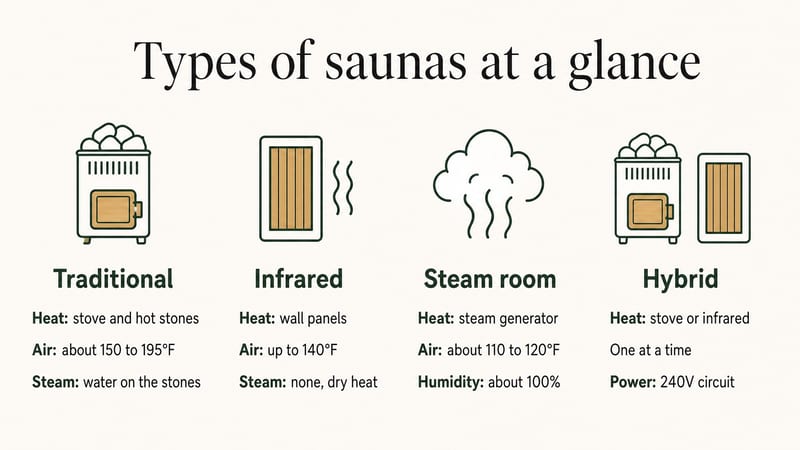
| Type | How it heats | Air temperature | Humidity | Steam? |
|---|---|---|---|---|
| Traditional (Finnish) | Electric or wood stove heats the air and stones | About 150 to 195°F | Dry, about 10% without water, higher when you add it | Yes, water on the stones |
| Infrared | Wall panels warm you directly | Up to 140°F on most of our models | Dry | No |
| Steam room | Steam generator fills a sealed room | About 110 to 120°F | About 100% | It is all steam |
| Hybrid | A stove and infrared panels in one cabin | Stove heat or up to 140°F infrared, one at a time | Dry in infrared mode | Ask us about water on the stove |
Sources: the North American Sauna Society’s guide to sauna types for the traditional and steam room figures, and the makers’ spec sheets for our infrared models.
A traditional sauna, often called a Finnish sauna, is a wood-lined room with a stove that heats a pile of stones. The hot stones and the air do the work, so the whole room gets hot, from the bench to the ceiling. The North American Sauna Society describes a room heated to about 150 to 195°F, with relative humidity from as low as 10% with no water up to 60% or more once you add it.
That water is the heart of it. The Finns call the burst of steam from water on hot stones löyly, and UNESCO added Finnish sauna culture to its list of intangible cultural heritage in 2020. Its listing notes that saunas come in many forms: electric, wood-heated, smoke and infrared.
Researchers use similar numbers. A 2018 systematic review of sauna studies describes traditional Finnish sessions at 80 to 100°C (about 176 to 212°F) with dry air of 10 to 20% relative humidity and short spells of higher humidity.
Traditional saunas come in three kinds of heat:
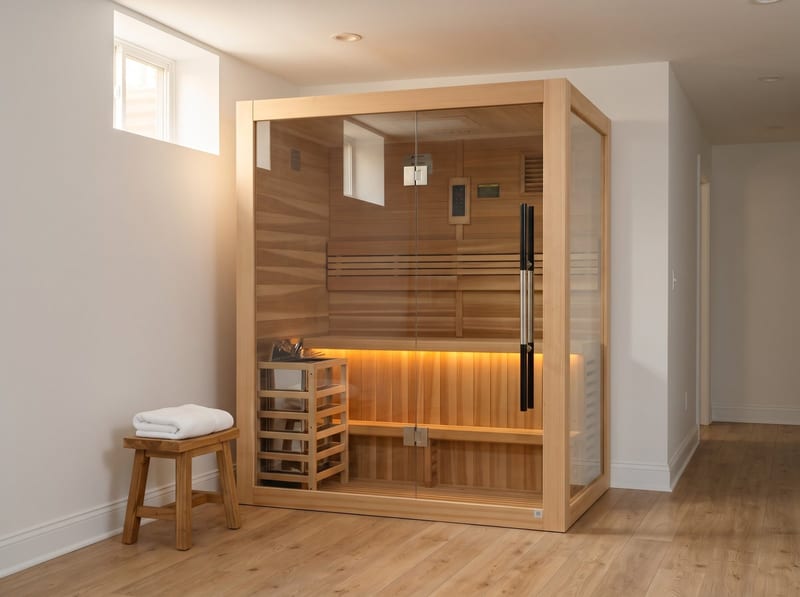
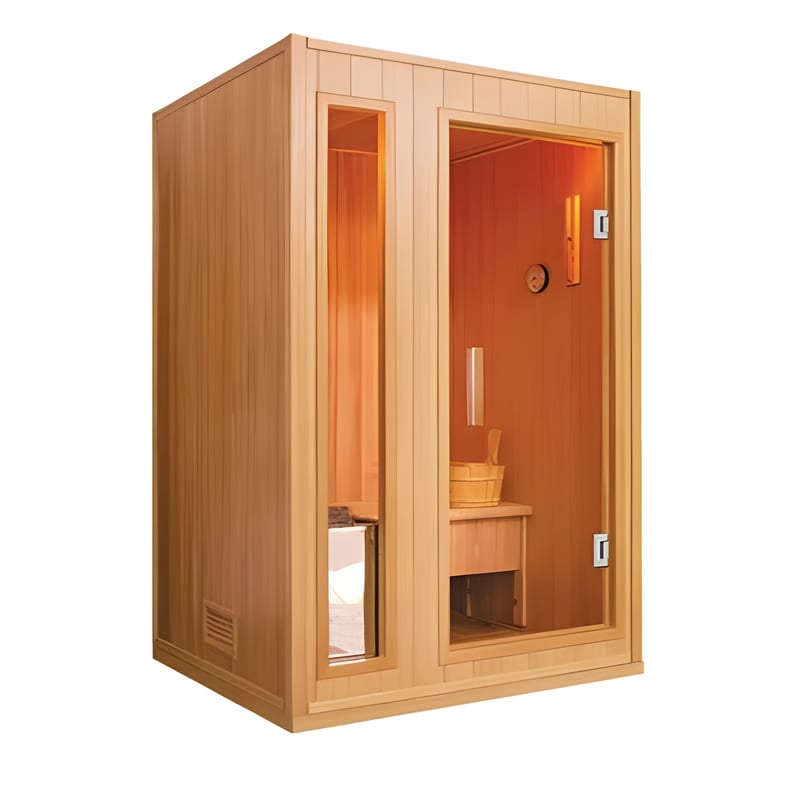
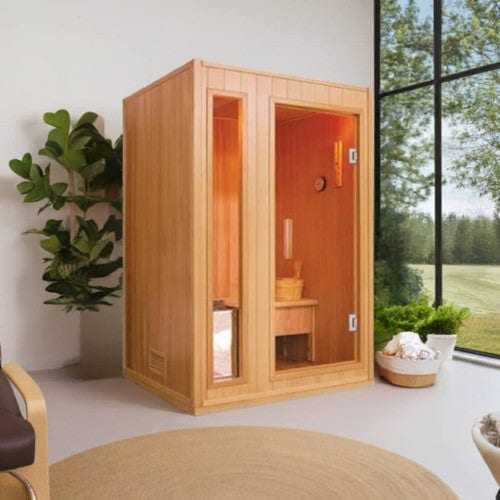
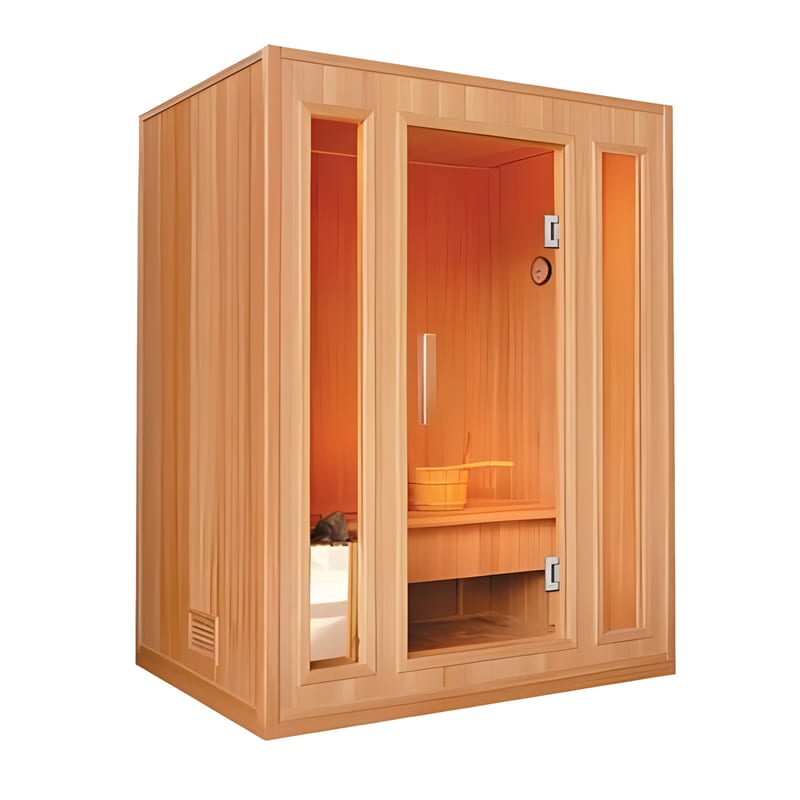
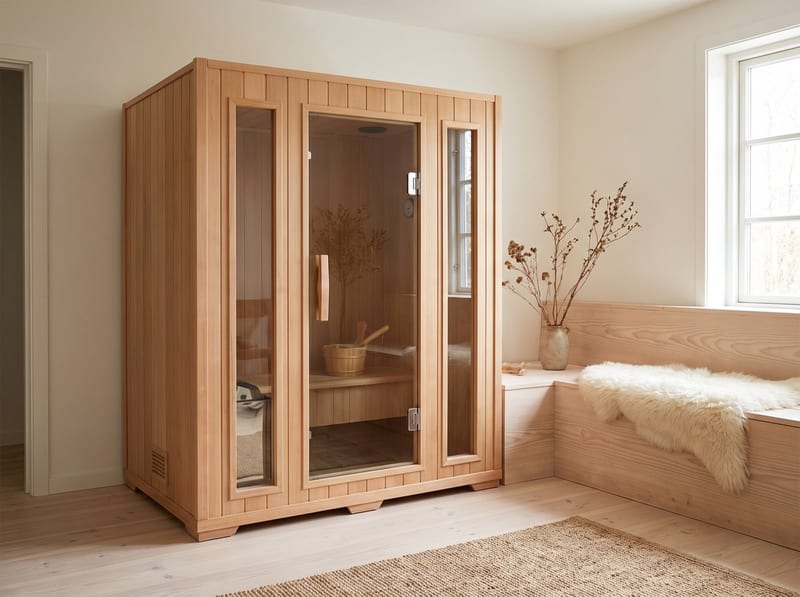
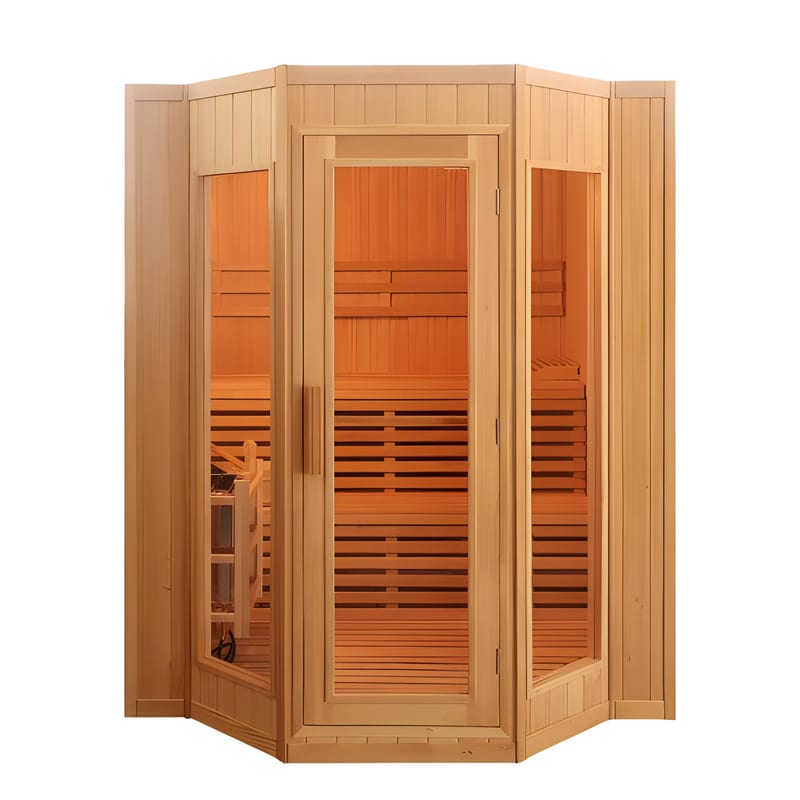
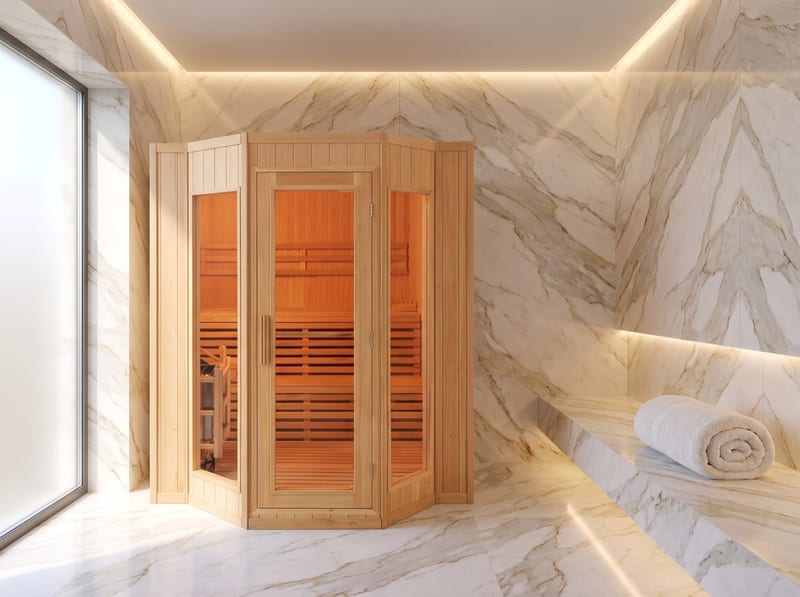
This is the usual choice for a home. An electric stove heats the stones, a thermostat holds the temperature, and there is no fire, smoke or chimney to deal with. The catch is power: home sauna stoves generally need a 240V circuit put in by a licensed electrician.
All thirteen of our traditional saunas are electric: a 3.5 kW Harvia heater in the Sunray Baldwin for two, a 4.5 kW heater in the Sunray Southport for three and the Sunray Rockledge for two, a 6 kW heater in the Sunray Tiburon and the Sunray Galaxie for four, a 6 kW stove in the Golden Designs Hanko and Sundsvall for two, and an 8 kW stove in the Forssa and Copenhagen for three and the Kuusamo and Osla for six. The Canadian Timber Element Nook, for one or two, and Element Loft, for two or three, come as a cabin on its own or with a Harvia 4.5 or 6 kW heater. The Hanko, Sundsvall, Copenhagen, Forssa, Kuusamo and Osla have a maker’s ideal range of 170 to 185°F; the Baldwin, Southport and Tiburon heat up to 170°F, and the Galaxie up to 180°F; Sunray publishes no figure for the Rockledge, nor Canadian Timber for the Element saunas.
A wood-burning stove heats the stones with a fire and sends the smoke out through a chimney. Many people love the crackle of the fire, but it means a flue, firewood and fire-safety clearances, so you mostly see them in cabins and backyard sauna buildings. We don’t sell wood-burning saunas, because our range is built for indoor rooms in an ordinary house.
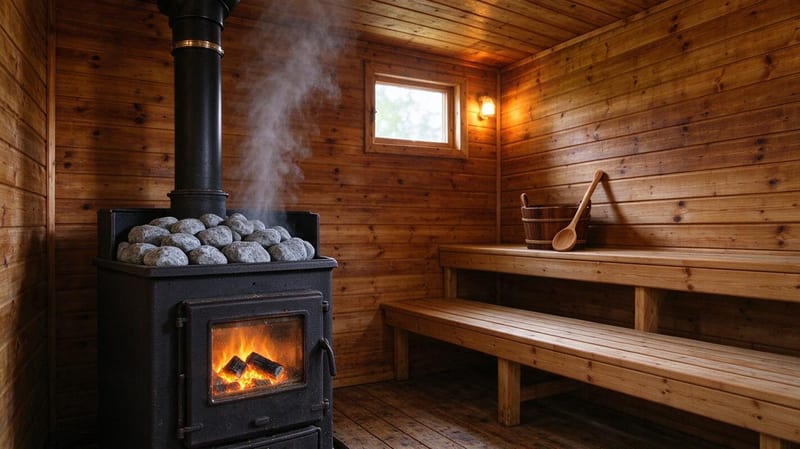
The oldest kind. A smoke sauna, savusauna in Finnish, has a big wood stove and no chimney. As the North American Sauna Society explains, once the heating is done and the flame is out, the room is aired out, and only then is the sauna ready. The Society calls it a rare sauna type, and it is not one for a suburban basement.
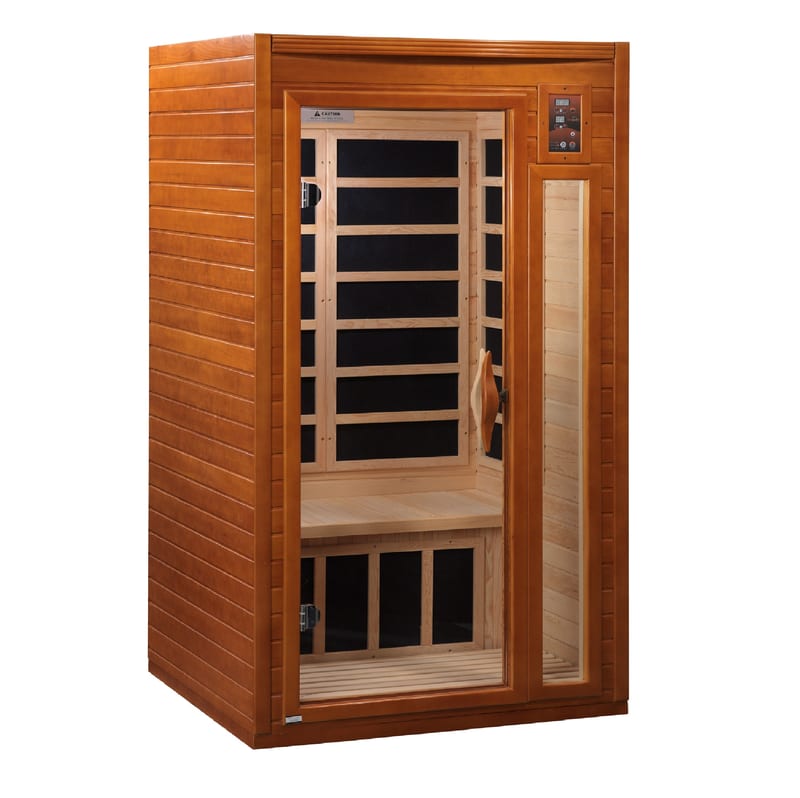
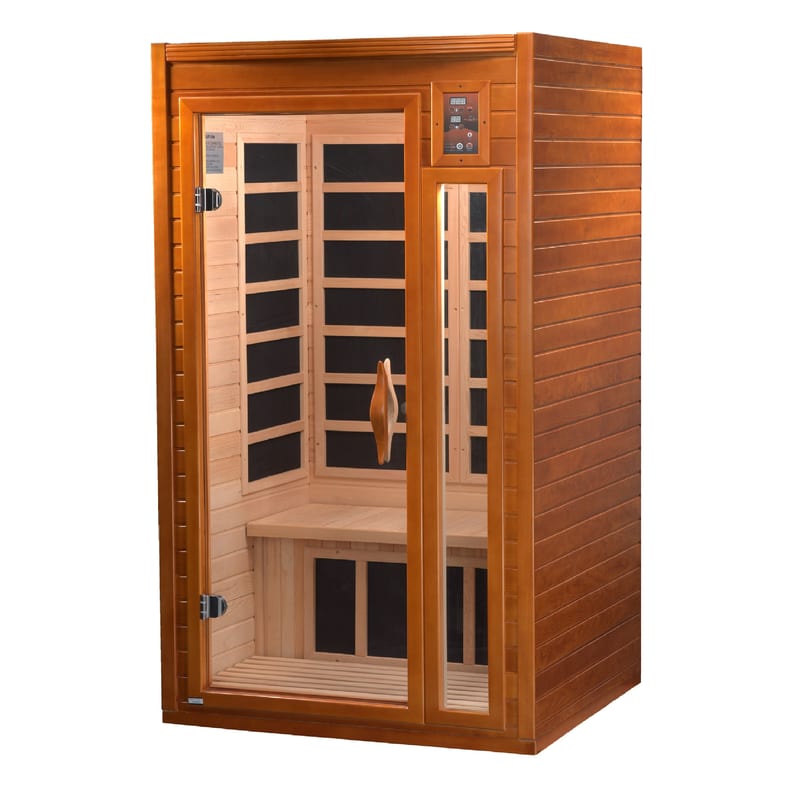
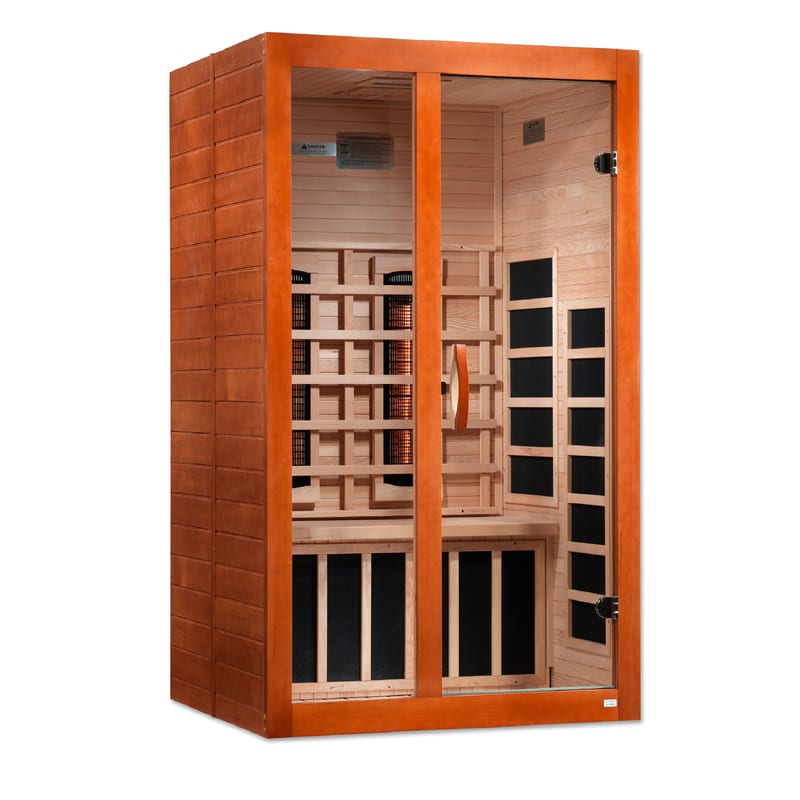
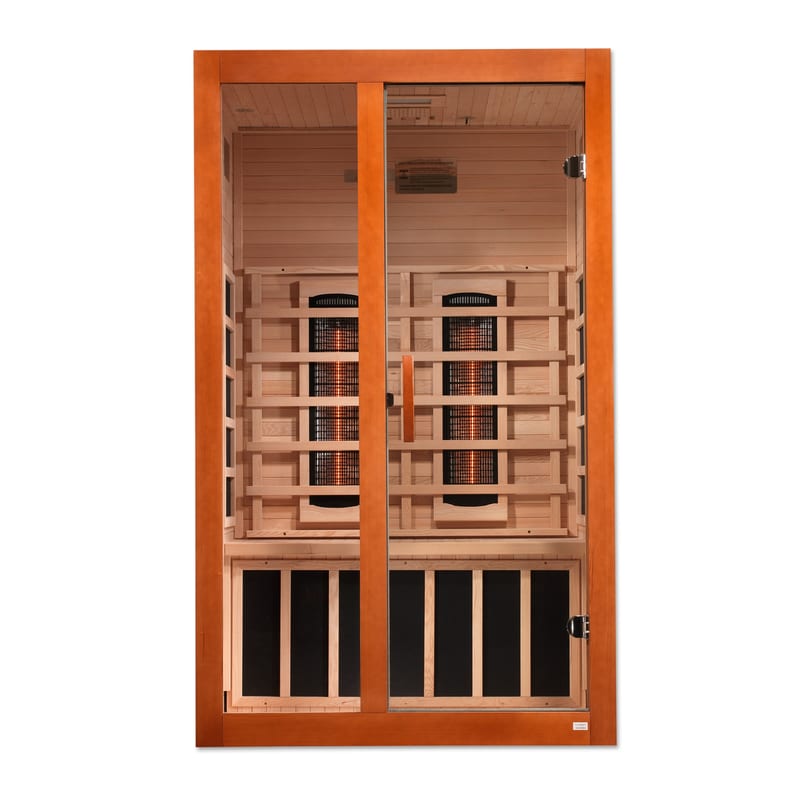
An infrared sauna has no stove and no stones. Heater panels in the walls give off infrared, which you feel as warmth on your skin, the way you feel the sun on your face. Because the panels warm you directly rather than heating all the air first, the cabin runs cooler than a stove sauna. The 2018 review puts infrared sessions in studies at 45 to 60°C, about 113 to 140°F. On our Dynamic and Golden Designs infrared saunas, the makers rate the cabin up to 140°F and suggest 118 to 132°F for most sessions; Sunray doesn’t publish a figure for its cedar Sedona.
It is dry heat: there are no stones, and water should never go near the panels. In return you get an easier install. Our compact models, like the Dynamic Barcelona at 39 by 36 inches, plug into a standard 120V/15A outlet.
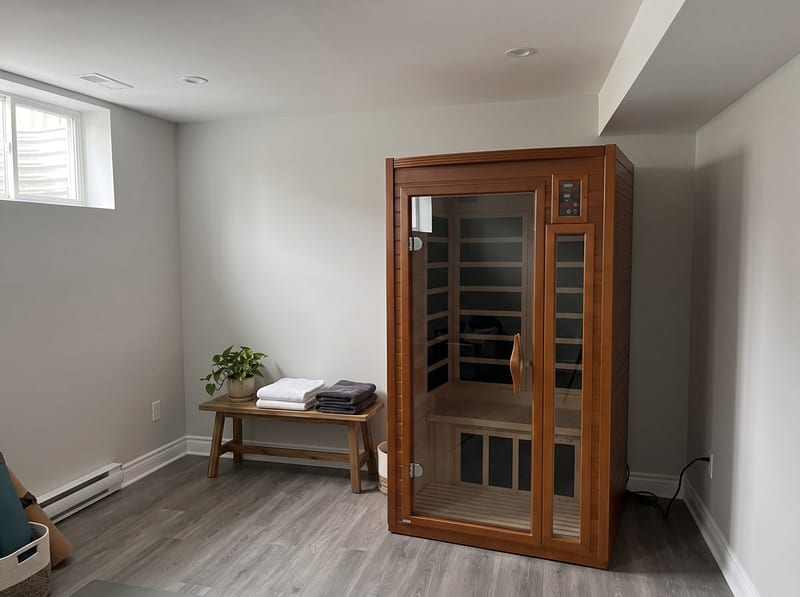
Infrared saunas come in two main styles:
My guide to near vs far infrared covers the wavelengths and the heater layout of each model in more detail.
A steam room is a sealed room, usually tiled, fed by a steam generator. The North American Sauna Society puts the humidity at 100% and the temperature much lower than a sauna, around 110 to 120°F. The air feels thick and wet rather than hot and dry.
Researchers see it as a different thing from a sauna: the 2018 review left out “wet” sessions above 50% humidity and kept only dry sauna studies. For a home, a steam room is really a bathroom project. It needs a waterproof, vapor-sealed enclosure and a drain, which is plumbing and tiling work rather than a cabin you assemble. We don’t sell steam rooms, so if a wet steam bath is what you want, a stove sauna with water on the stones is the closest thing we carry.
A hybrid puts a traditional stove and infrared panels in the same cabin, so you can choose hot stove heat one evening and gentler infrared the next. We sell two, both from Golden Designs. The Soria, for three, has five Near Zero EMF carbon panels and three near infrared elements plus a Harvia 6 kW stove; the Toledo, for six, has five carbon panels and eight near infrared elements plus a Harvia 8 kW stove. On both you run one heat source at a time. In infrared mode they heat up to 140°F; the stove gives you a traditional, hotter sauna. If steam is the main reason you want one, ask us before you order and we’ll check the maker’s guidance on using water with its stove.
The trade-off is size and power. The Soria needs 65 by 57 inches of floor, stands 80 inches tall, and runs on a 240V/30A circuit put in by a licensed electrician. The Toledo needs 80 by 83 inches, stands 80 inches tall and runs on one 240V/40A circuit, also wired by a licensed electrician.
These describe a sauna’s shape or place, not how it heats, which is why they show up on some lists of sauna types and not others.
Everything we sell is an indoor wooden cabin, built to stand on a flat, level floor in a spare room, basement or garage. My indoor sauna install guide walks through the room, the floor and the wiring step by step.
For a home, space and wiring decide more than anything else. Here is how one model of each type in our range compares, from the makers’ spec sheets:
| Model | Type | Seats | Outside size (W x D x H) | Power |
|---|---|---|---|---|
| Dynamic Barcelona | Far infrared | 1 to 2 | 39" x 36" x 73" | 120V/15A plug-in |
| Dynamic Santiago Full Spectrum | Full spectrum infrared | 2 | 46" x 40" x 75" | 120V/15A plug-in |
| Sunray Baldwin | Traditional, 3.5 kW heater | 2 | 59" x 42" x 75" | 220-240V/20A circuit |
| Sunray Rockledge | Traditional, 4.5 kW heater | 2 | 59" x 42" x 75" | 220-240V/30A circuit |
| Canadian Timber Element Nook | Traditional, 4.5 kW heater option | 1 to 2 | 54.75" x 54.75" x 88" | 240V circuit, hardwired |
| Sunray Southport | Traditional, 4.5 kW heater | 3 | 69" x 47" x 75" | 220-240V/30A circuit |
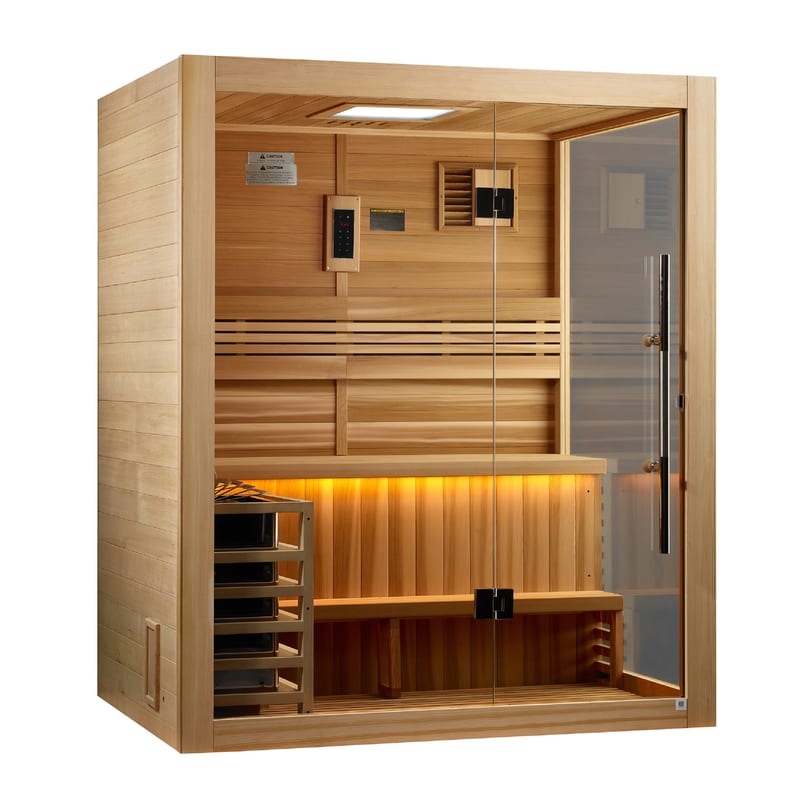
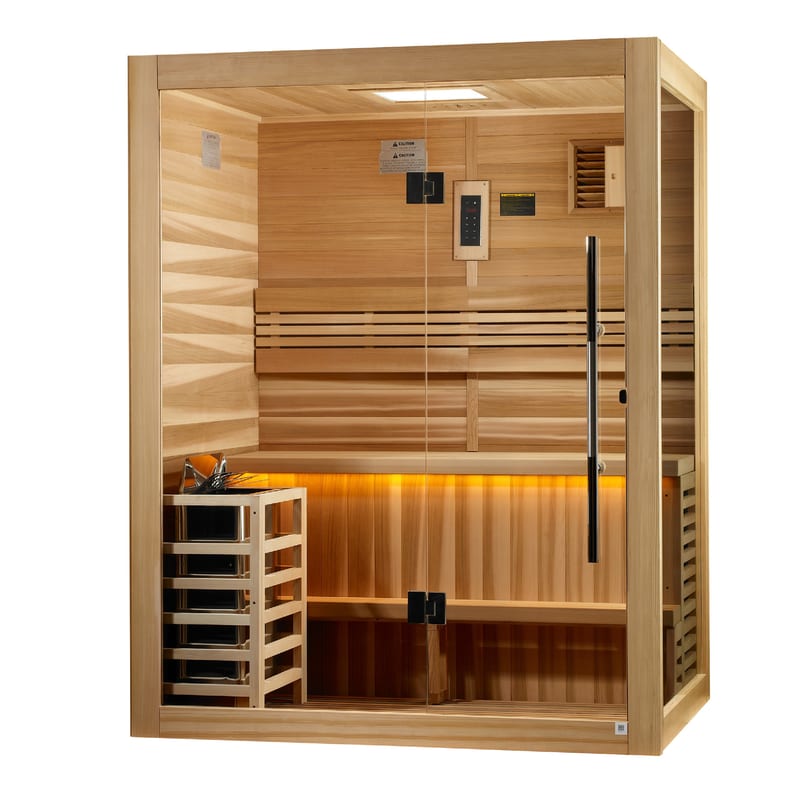
| Golden Designs Hanko | Traditional, 6 kW stove | 2 | 64" x 48" x 78" | 240V/30A stove circuit + 120V/15A outlet |
| Golden Designs Forssa | Traditional, 8 kW stove | 3 | 75" x 48" x 78" | 240V/40A stove circuit + 120V/15A outlet |
| Golden Designs Soria | Hybrid | 3 | 65" x 57" x 80" | 240V/30A circuit |
| Sunray Tiburon | Traditional, 6 kW heater | 4 | 63" x 69" x 79" | 220-240V/30A circuit |
| Sunray Galaxie | Traditional, 6 kW heater | 4 | 71" x 55" x 79" | 220-240V/30A circuit |
| Golden Designs Kuusamo | Traditional, 8 kW stove | 6 | 77" x 67" x 82" | 240V/40A stove circuit + 120V/15A outlet |
| Golden Designs Osla | Traditional, 8 kW stove | 6 | 79" x 72" x 83" | 240V/40A stove circuit + 120V/15A outlet |
| Golden Designs Toledo | Hybrid | 6 | 80" x 83" x 80" | 240V/40A circuit |
The pattern is clear: infrared is the only type that starts small and plugs into an ordinary outlet. Every stove and hybrid model needs a 240V circuit, and the Golden Designs stove saunas want a water-tolerant floor such as concrete or tile. Power use differs too. The Barcelona draws 1,600 watts, while the Hanko’s stove is rated at 6 kW, so an hour at full power uses roughly four times the electricity. My guide to what a home sauna costs does the running-cost math.
Here is how I would choose:
My recommendation: for most homes, start with infrared. After a long hike, a quiet half hour in a 2 person far infrared cabin that plugs into the wall is hard to beat for how little it asks of your house. If you grew up with the hiss of water on hot stones, go straight to the Hanko or the Forssa and book the electrician first. Still torn between the two? My infrared vs traditional sauna comparison goes deeper on heat, steam, wiring and cost.
Best price guarantee. Find the same sauna for less at another authorized US retailer and we’ll match it. See how it works.
People usually mean dry saunas and wet steam rooms, or, among home saunas, traditional and infrared. A traditional sauna heats the air and stones with a stove, at about 150 to 195°F, and you add steam with water. An infrared sauna warms you with wall panels, up to 140°F on most of our models, with no steam. Steam rooms sit near 100% humidity at about 110 to 120°F.
We don’t rank them that way. A 2018 systematic review found there is not yet enough evidence to tell the health effects of regular Finnish and infrared sauna use apart. Choose on what you can check: the heat you enjoy, steam or no steam, the space you have and your wiring. If you’re not sure a sauna suits you, check with your doctor first.
In our range, only infrared. Almost all our 1 and 2 person infrared saunas plug into a standard 120V outlet; Dynamic and Golden Designs advise one on its own circuit, no GFCI and no extension cords. The GoldenWave HS-2 and HS-4 corner sauna run on 120V but need a dedicated 20A circuit. Larger infrared models need a dedicated 120V/20A circuit or two circuits. Every traditional stove sauna we sell, and our two hybrids, need a 240V circuit put in by a licensed electrician.
The oldest kind of sauna: a room with a big wood-burning stove and no chimney. The stove heats the room and the stones, the flame goes out, the room is aired out, and only then do you go in. The North American Sauna Society calls it a rare sauna type today. It isn’t something you would fit inside a house, and we don’t sell them.
Infrared. Our smallest, the GoldenWave HF-MINI for one, needs 28.3 by 32.3 inches of floor and stands 61.4 inches tall; compact models such as the Dynamic Barcelona need 39 by 36 inches (plus a 2 inch roof overhang) and stand 73 inches tall. Both plug into a standard outlet, so they fit a spare-room corner or a large closet. Our most compact stove saunas, the Sunray Baldwin and Rockledge, need 59 by 42 inches and a 240V circuit.
Ethan Parker
Sauna Specialist
Ethan Parker is a home wellness expert with over a decade of experience in the consumer products industry. He founded the store with a simple mission: to make buying an indoor sauna transparent, straightforward, and stress-free. Whether he's breaking down the science of infrared heat or testing new models, Ethan provides honest, jargon-free advice to help families find their perfect fit. Outside of work, he is passionate about fitness, hiking, and building healthy, relaxing routines with his family.
Help me choose
Five quick questions about your room, your power and your budget. We'll show the saunas that fit best.
Shop the story
 New
 New
 New
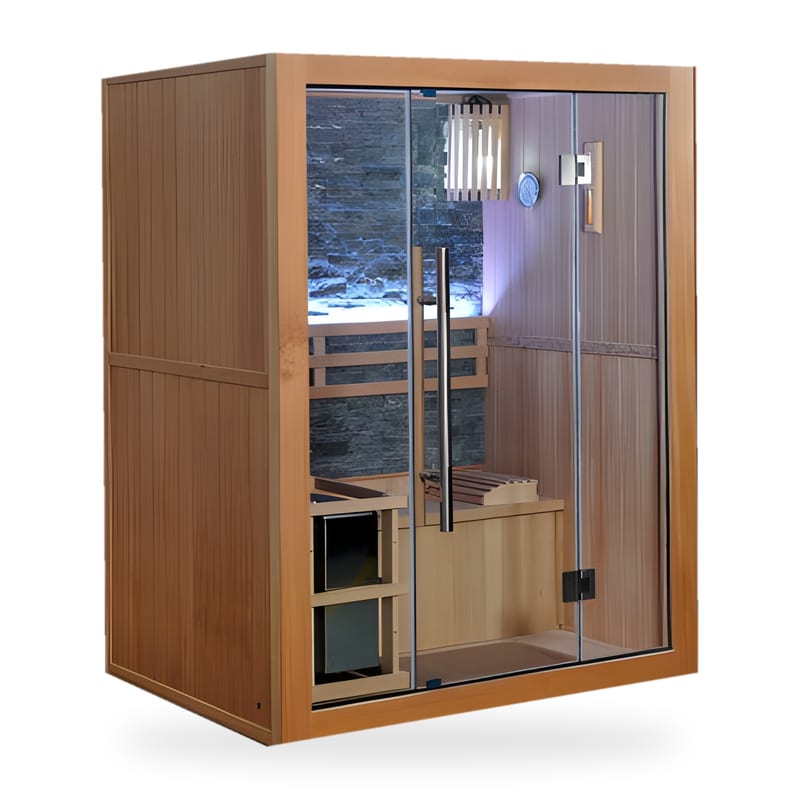
 New
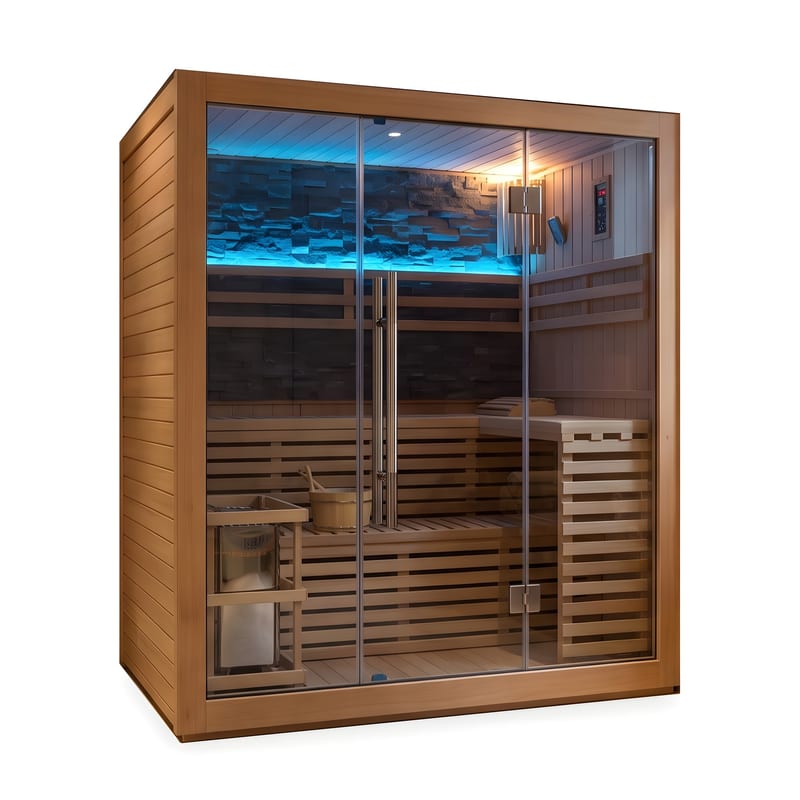
 New
 New
Free shipping over $1,000
Saunas arrive by curbside freight, and the carrier calls ahead.
How delivery works