
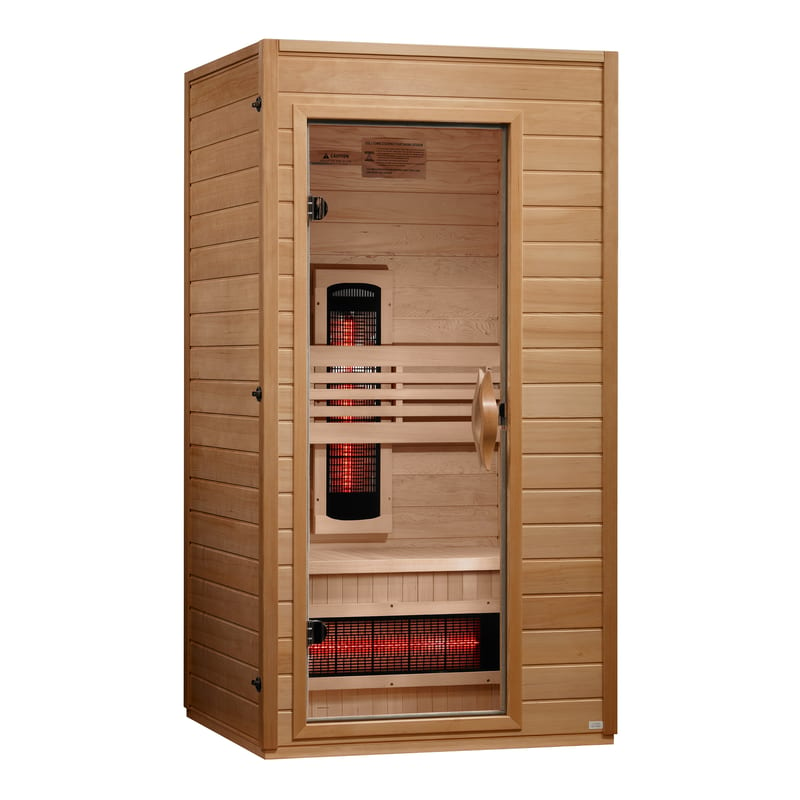
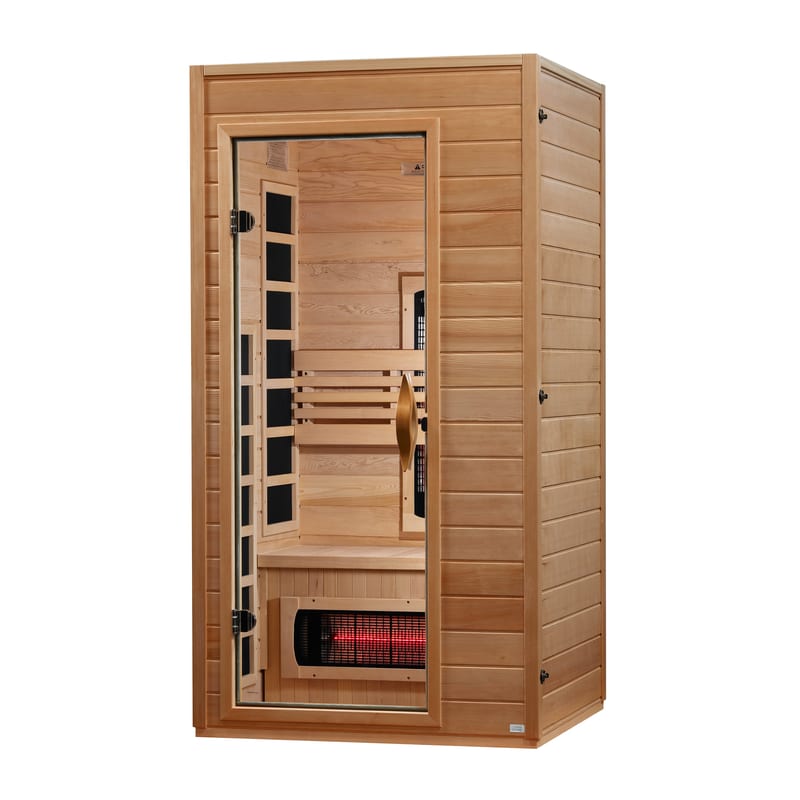
 Save 8%
Free shipping over $1,000 How delivery works
Best price guarantee on every sauna How it works
Near vs far infrared sauna explained: one spectrum, two kinds of heater. What each one is, what full spectrum means on our saunas, and how to choose.

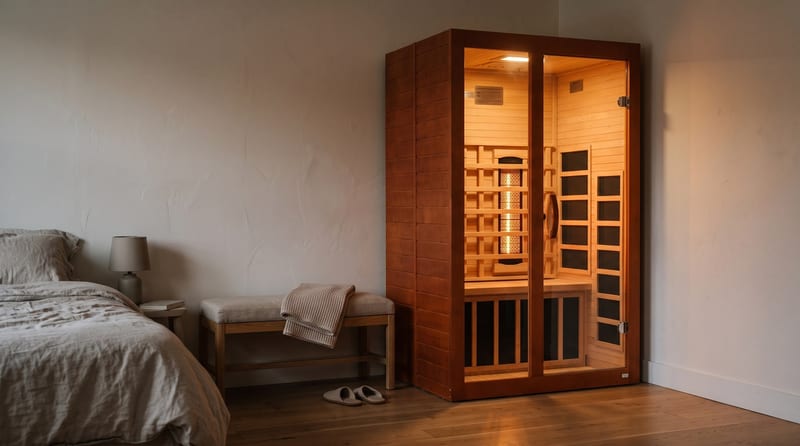
“Near infrared” and “far infrared” get used a lot in sauna listings, often with big promises attached. The actual difference is simpler than the marketing makes it sound. It comes down to wavelength and to the type of heater that produces it.
Here is what each term means, how the heaters differ, what “full spectrum” means on the saunas we sell, and how I would choose. I’ll keep it to how the heaters work and what each type means for your room, and I won’t make health claims.
Infrared is light just past the red end of what your eyes can see. You can’t see it, but you feel it as warmth, the same way you feel the sun on your face or the heat off a campfire.
Infrared covers a wide range of wavelengths, and scientists split it into bands. The International Commission on Illumination (CIE) uses three:
| Band | Wavelength | Common sauna name |
|---|---|---|
| IR-A | 0.78 to 1.4 micrometers | Near infrared |
| IR-B | 1.4 to 3 micrometers | Often called mid infrared |
| IR-C | 3 micrometers to 1 millimeter | Far infrared |
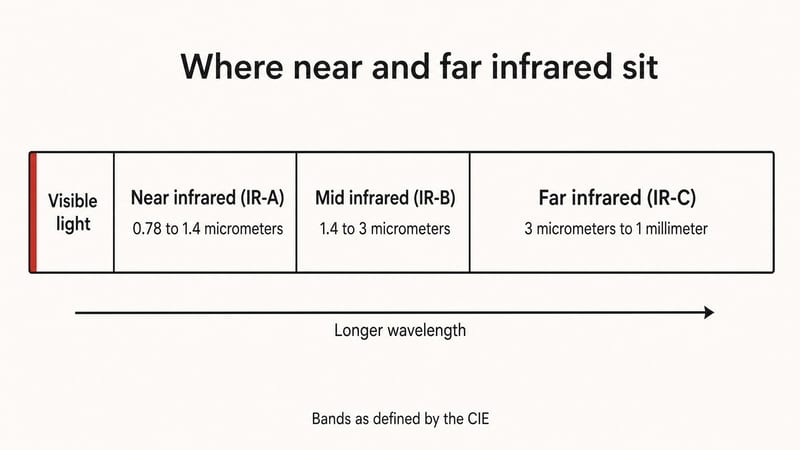
Near infrared is the short-wavelength end, closest to visible red light. Far infrared is the long-wavelength end. Other standards draw the lines in slightly different places, and sauna makers use the terms loosely, so use the bands as a guide rather than a hard rule.
One thing to be clear about: the spec sheets for the saunas we sell do not publish a wavelength for each heater.
The two kinds of infrared come from two different kinds of heater.
Far infrared: carbon panels. These are wide, flat heating panels set into the cabin walls. Nearly every infrared sauna we sell has them. Dynamic and Golden Designs rate them by EMF (the electromagnetic field measured near the panel):
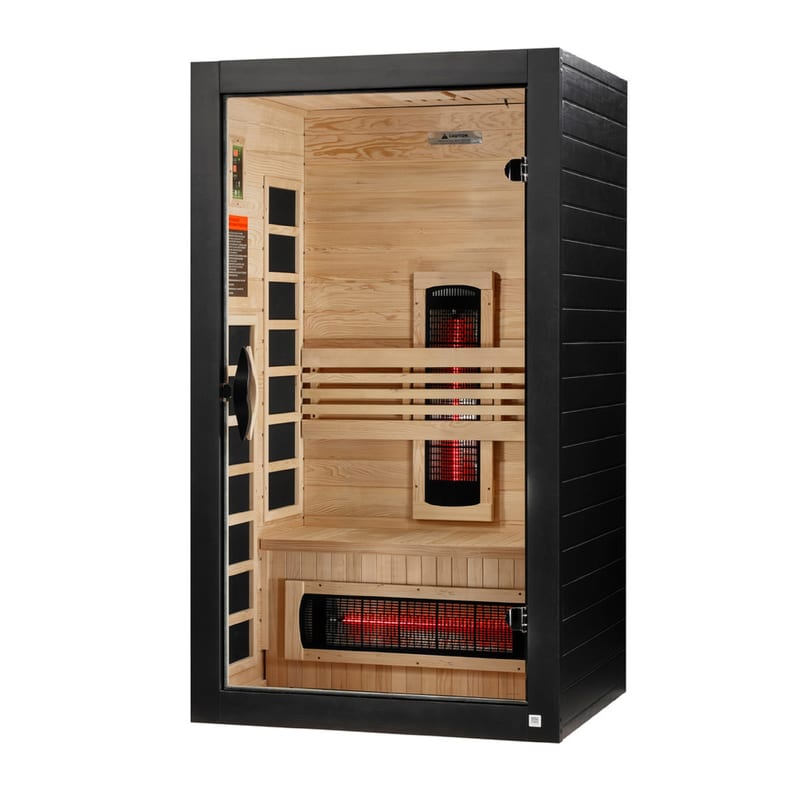
Near infrared: separate elements. Full spectrum saunas add near infrared elements alongside the carbon panels. They are a separate heater from the panels, and the number of them varies by model, from two to eight.
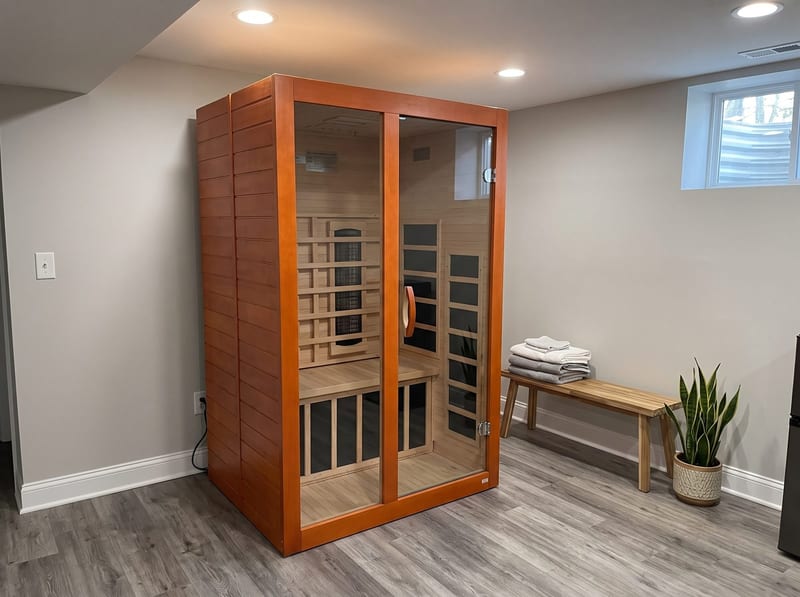
Whichever type you choose, Dynamic and Golden Designs rate the cabin the same way: up to 140°F, with 118 to 132°F suggested.
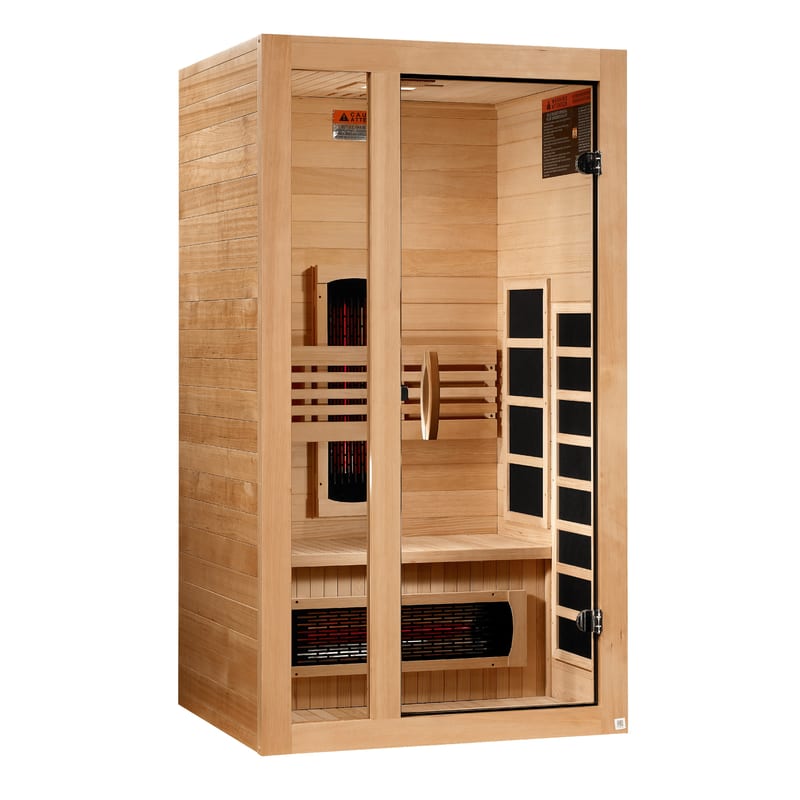
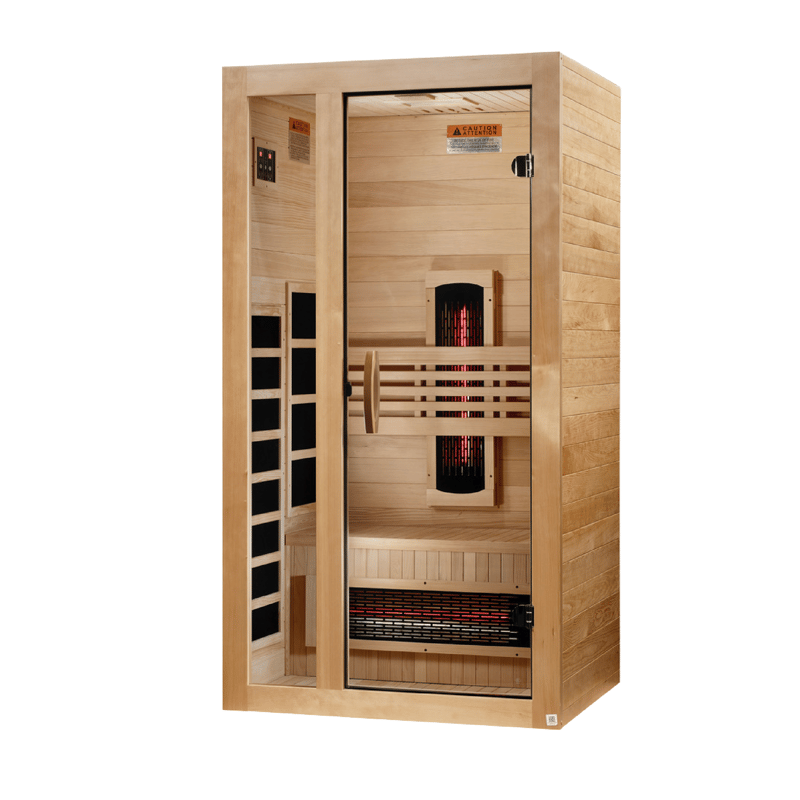
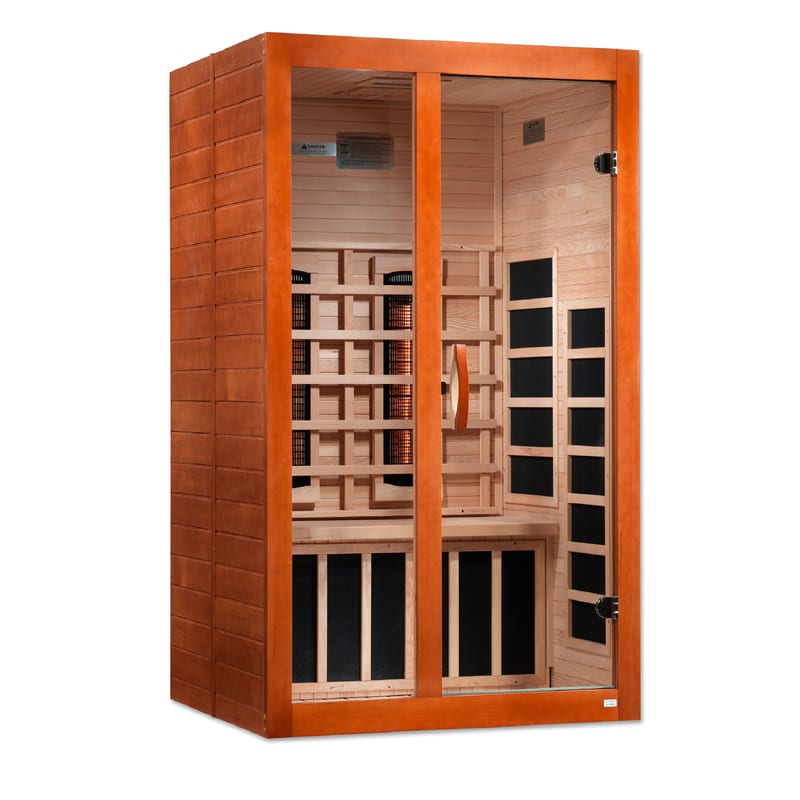
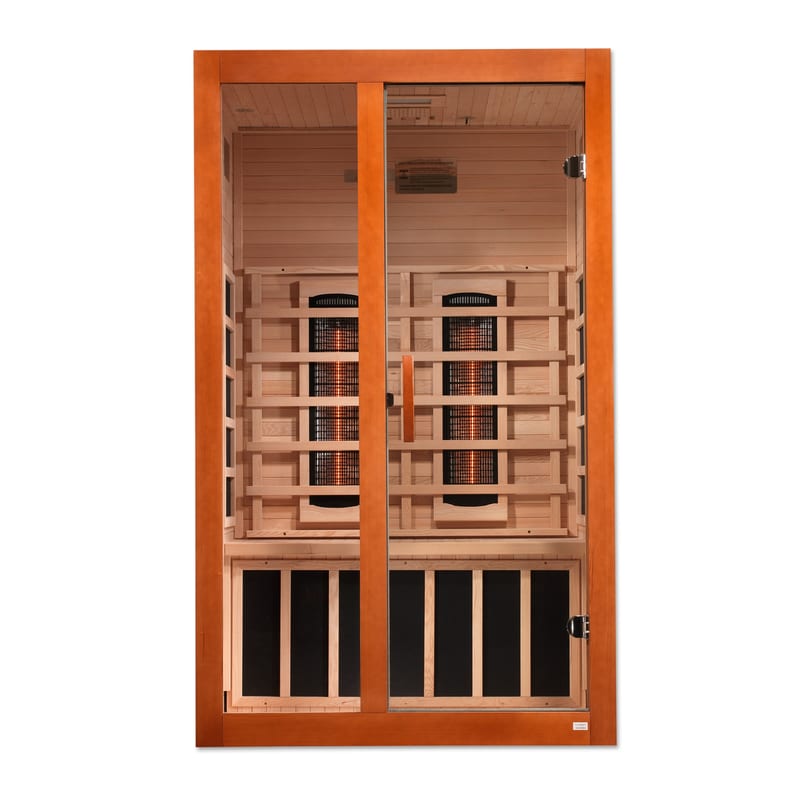
On our saunas, “full spectrum” means Near Zero EMF carbon far infrared panels plus near infrared elements. The spec sheets don’t list a separate mid infrared heater. Here is the heater count for each model:
| Model | Seats | Carbon far infrared panels | Near infrared elements | Power |
|---|---|---|---|---|
| Dynamic Martin | 1 to 2 | 4 | 2 | 120V/15A plug-in |
| Dynamic Santorini | 1 to 2 | 4 | 2 | 120V/15A plug-in |
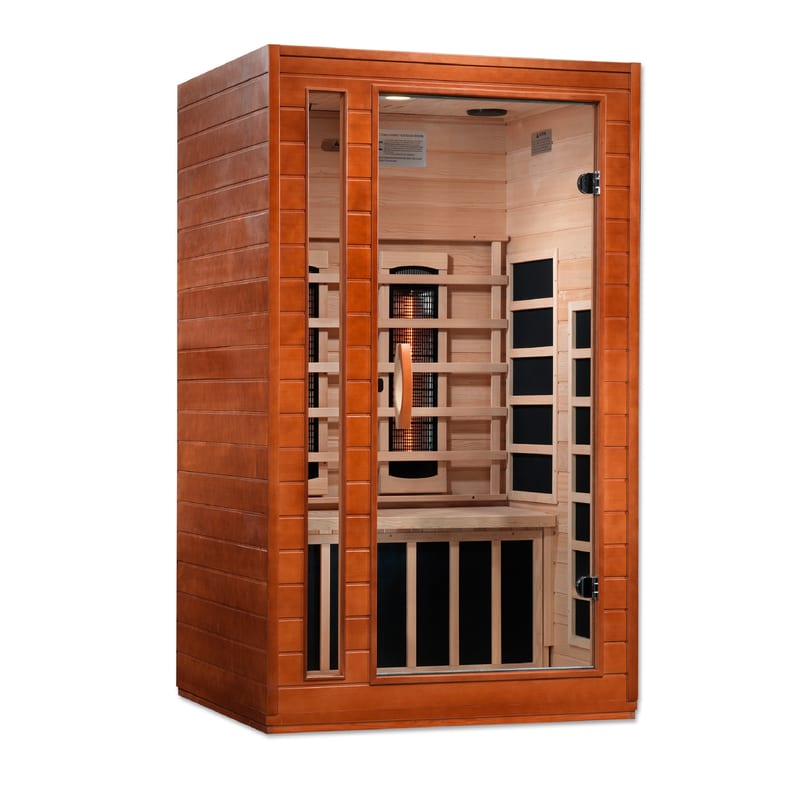
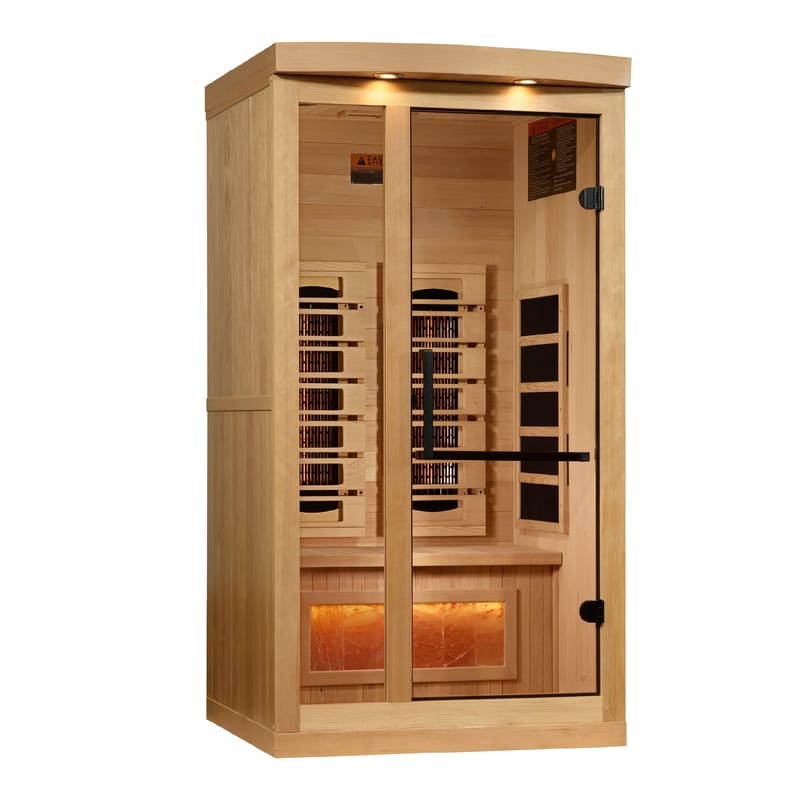
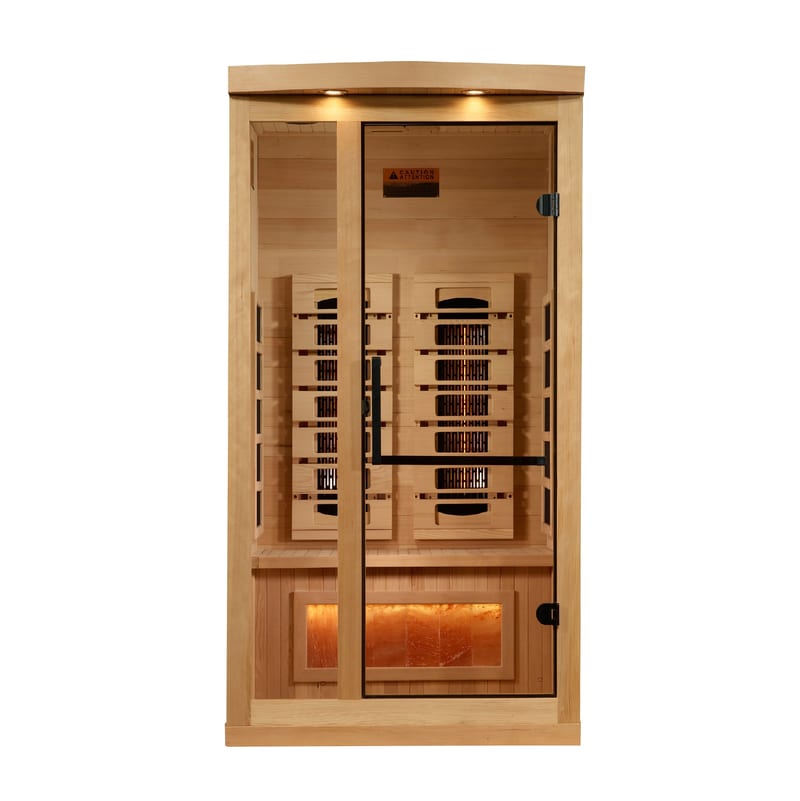
| Dynamic Gracia Full Spectrum | 1 to 2 | 4 | 2 | 120V/15A plug-in |
| Dynamic Santiago Full Spectrum | 2 | 5 | 2 | 120V/15A plug-in |
| Dynamic Cordoba Full Spectrum | 2 | 5 | 2 | 120V/15A plug-in |
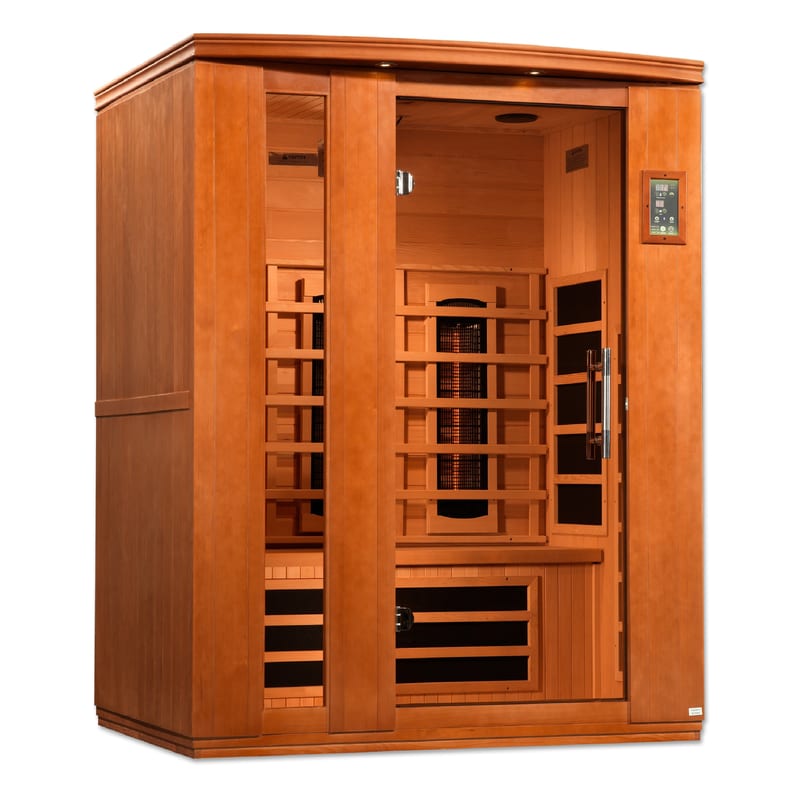
| Dynamic Lugano Full Spectrum | 3 | 6 | 3 | Dedicated 120V/20A |
| Dynamic Vila Grande | 4 | 4 | 4 | Dedicated 120V/20A |
| Golden Designs Reserve Edition 1 Person | 1 | 3 | 2 | 120V/15A plug-in |
| Golden Designs Reserve Edition 2 Person | 2 | 3 | 3 | 120V/15A plug-in |
| Golden Designs Reserve Edition 3 Person | 3 | 3 | 5 | Dedicated 120V/20A |
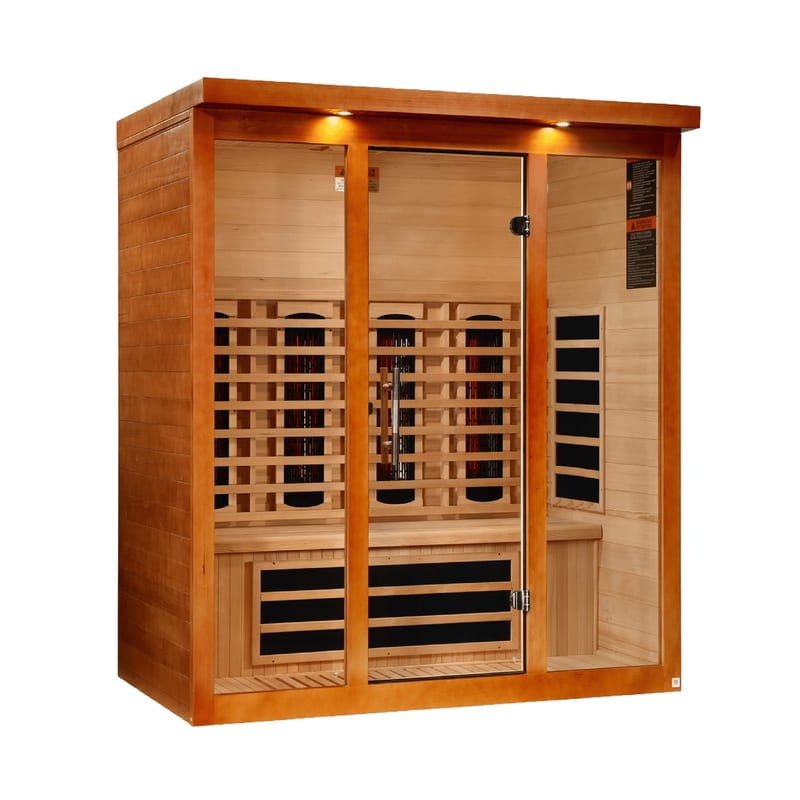
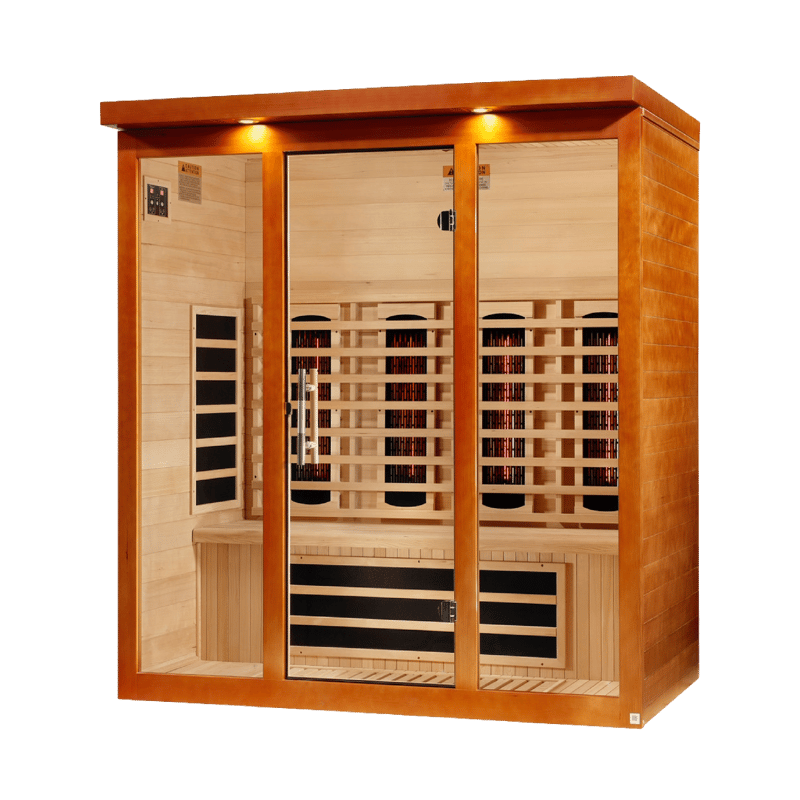
| Golden Designs Reserve Edition 4 Person | 4 | 3 | 6 | Two 120V/15A outlets |
| Golden Designs Soria Hybrid | 3 | 5 | 3 | 240V/30A, electrician |
| Golden Designs Toledo Hybrid | 6 | 5 | 8 | 240V/40A, electrician |
Two patterns stand out. The Dynamic full spectrum models lean on carbon panels, with two to four near infrared elements. The Golden Designs Reserve Editions keep three carbon panels and add more near infrared elements as the cabin grows, up to six in the 4 person. The Soria and Toledo hybrids also have a Harvia traditional stove, 6 kW and 8 kW, and the 6 person Toledo has the most near infrared elements we carry, eight; you run one heat source at a time.
You can see all of them together in the full spectrum infrared saunas collection.
Most of our range is far infrared only, with carbon panels and no near infrared elements. They include our lowest-priced saunas, and you can see them all in our far infrared saunas collection. Many come in a standard Low EMF version and an Elite (Ultra Low EMF) version, which is a step up in price; the low EMF infrared saunas page lists every model by its EMF rating.
The cleanest way to see what near infrared adds is to compare the same cabin both ways:
| Model | Far infrared version | Full spectrum version |
|---|---|---|
| Gracia (1 to 2 person) | 7 Low EMF carbon panels | 4 Near Zero EMF carbon panels + 2 near infrared elements |
| Santiago (2 person) | 7 Low EMF carbon panels | 5 Near Zero EMF carbon panels + 2 near infrared elements |
| Cordoba (2 person) | 7 Low EMF carbon panels | 5 Near Zero EMF carbon panels + 2 near infrared elements |
| Lugano (3 person) | 9 Low EMF carbon panels | 6 Near Zero EMF carbon panels + 3 near infrared elements |
The outside size and the power needs are the same in each pair. The Dynamic Santiago 2 Person far infrared and its full spectrum twin are both 46" W x 40" D x 75" H, both plug into a 120V/15A outlet, and both draw 1,700 watts. What the extra money buys is the near infrared elements and the lower EMF rating on the carbon panels.
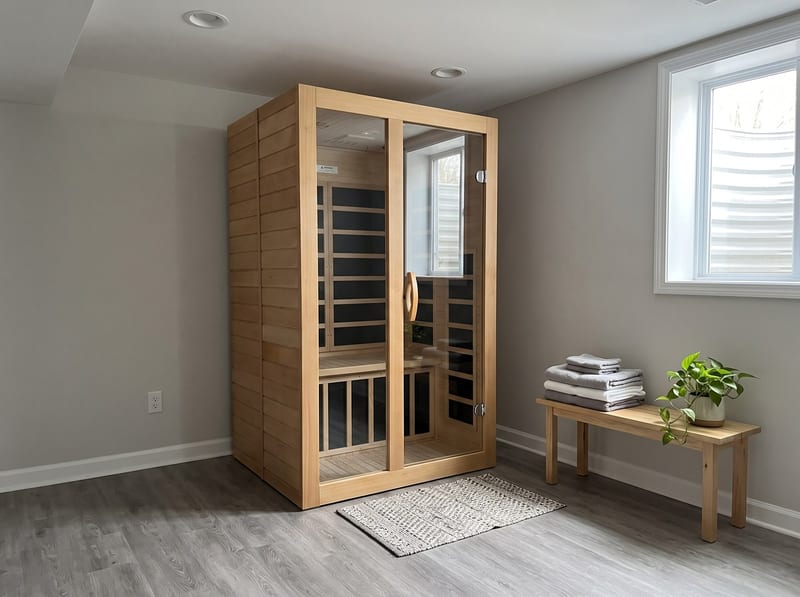
You will find plenty of claims online about what near or far infrared does for the body. I’m not going to repeat them or tell you one wavelength is better for your health. Choose on the things you can check: heater layout, EMF rating, size, power and price. If you’re not sure a sauna suits you, check with your doctor before you use one.
My recommendation: if you are on the fence, compare the Santiago far infrared with the Santiago full spectrum. Same cabin, same plug, same 140°F rating. If near infrared elements and Near Zero EMF are worth the higher price to you, go full spectrum; if not, the far infrared Santiago is a very sensible buy. Either way, shipping is free, and if you find the same sauna for less at another authorized US retailer, we’ll match the price. Still deciding between infrared and a stove sauna? Read my infrared vs traditional sauna comparison first.
Wavelength. Near infrared is the short-wavelength end of the infrared range, closest to visible red light; the CIE calls it IR-A, 0.78 to 1.4 micrometers. Far infrared is the long-wavelength end, IR-C, from 3 micrometers to 1 millimeter. In most of our saunas, far infrared comes from carbon panels and near infrared from separate near infrared elements.
On the models we sell it means Near Zero EMF carbon far infrared panels plus near infrared elements. For example, the Dynamic Santiago Full Spectrum has 5 carbon panels and 2 near infrared elements, and the Golden Designs Reserve Edition 4 Person has 3 carbon panels and 6 near infrared elements. The spec sheets don’t list a separate mid infrared heater.
No. Dynamic and Golden Designs rate both types the same: up to 140°F, with 118 to 132°F suggested for most sessions.
Not for the same size of cabin. The Santiago far infrared and the Santiago full spectrum both plug into a standard 120V/15A outlet and both draw 1,700 watts. The bigger full spectrum models need a dedicated 120V/20A circuit, two outlets or, for the Soria and Toledo hybrids, 240V/30A and 240V/40A.
On our range, yes. Their carbon panels are rated Near Zero EMF, under 3 mG at 2 to 3 inches. Our far infrared models are rated Low EMF (5 to 10 mG) or, on the Elite versions, Ultra Low EMF (3 to 5 mG).
No. On our saunas the red light is one setting of the color light system, which most models have, far infrared ones included. Near infrared comes from separate near infrared elements, which only our full spectrum models have. Check the heater line in the specs.
We don’t make that claim. Choose on what you can check: heater layout, EMF rating, size, power and price. If you’re not sure a sauna suits you, check with your doctor first.
Ethan Parker
Sauna Specialist
Ethan Parker is a home wellness expert with over a decade of experience in the consumer products industry. He founded the store with a simple mission: to make buying an indoor sauna transparent, straightforward, and stress-free. Whether he's breaking down the science of infrared heat or testing new models, Ethan provides honest, jargon-free advice to help families find their perfect fit. Outside of work, he is passionate about fitness, hiking, and building healthy, relaxing routines with his family.
Help me choose
Five quick questions about your room, your power and your budget. We'll show the saunas that fit best.
Shop the story
Save 8%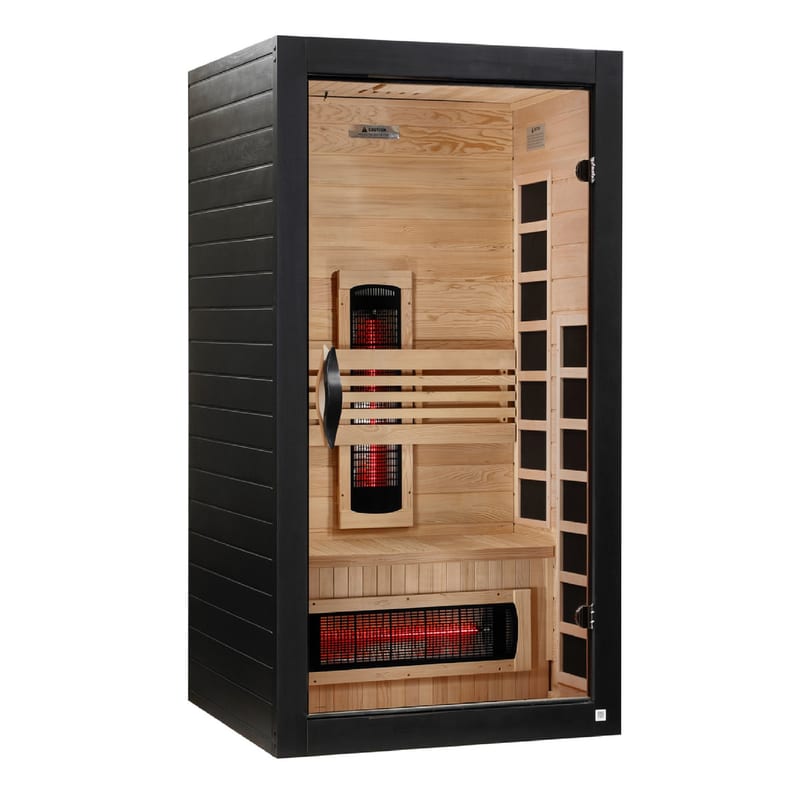
 Save 13%
 Save 24%
Free shipping over $1,000
Saunas arrive by curbside freight, and the carrier calls ahead.
How delivery works