
Free shipping over $1,000 How delivery works
Best price guarantee on every sauna How it works
The real infrared sauna benefits, ranked by evidence: gentle warmth and relaxation first, early studies on heart and recovery, and claims that don’t hold up.

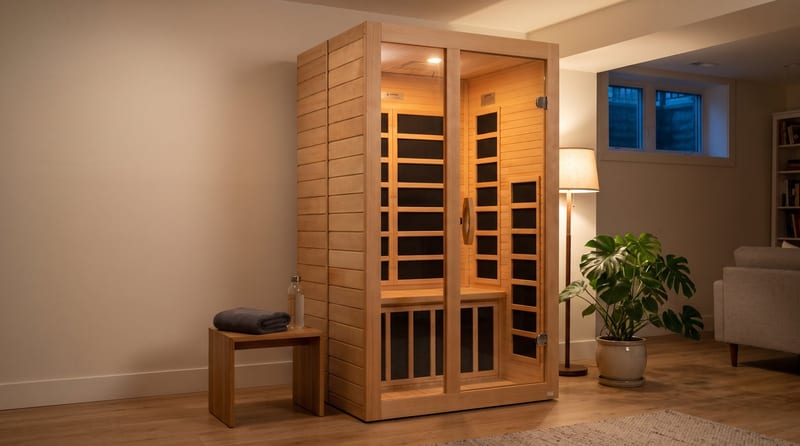
The real benefits of an infrared sauna are simple: deep, even warmth at a lower air temperature than a traditional sauna, and a quiet, regular way to unwind at home. Small studies also look at effects on the heart, blood vessels and how you feel after exercise, but the research is still limited, and many of the bigger claims you’ll see online don’t hold up.
I sell infrared saunas for the home, so I have every reason to oversell them. I’m not going to. Below is what the published research actually says about infrared sauna benefits, what it doesn’t say, and how to get the most out of one if you decide it’s for you.
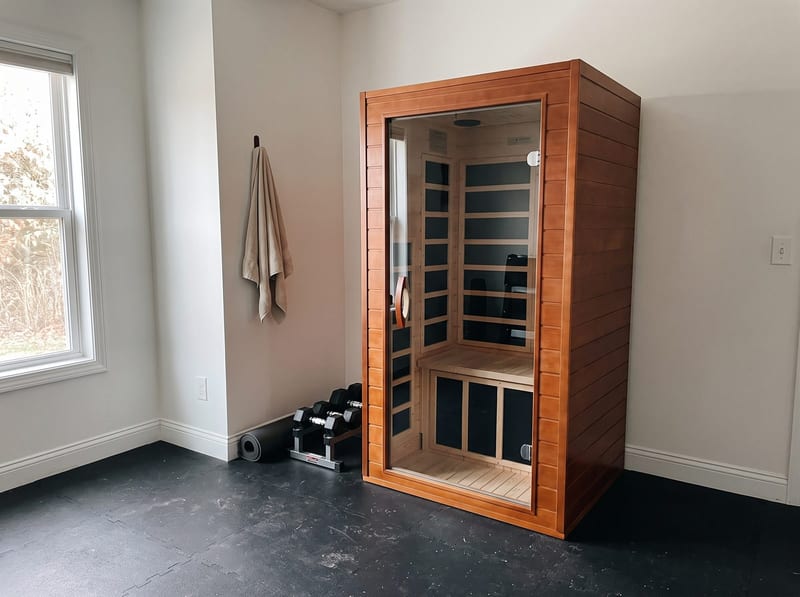
A traditional sauna heats the air, and the hot air heats you. An infrared sauna skips most of that step. Heater panels in the walls give off infrared heat that warms your skin directly, the way the sun warms your face on a cold day.
That’s why the air stays cooler. Cleveland Clinic puts infrared saunas at about 110 to 135°F and traditional saunas at 150 to 195°F. Our Dynamic models heat up to 140°F, and the maker suggests 118 to 132°F for most sessions.
Within a few minutes, your body starts to respond the same way it does to any heat:
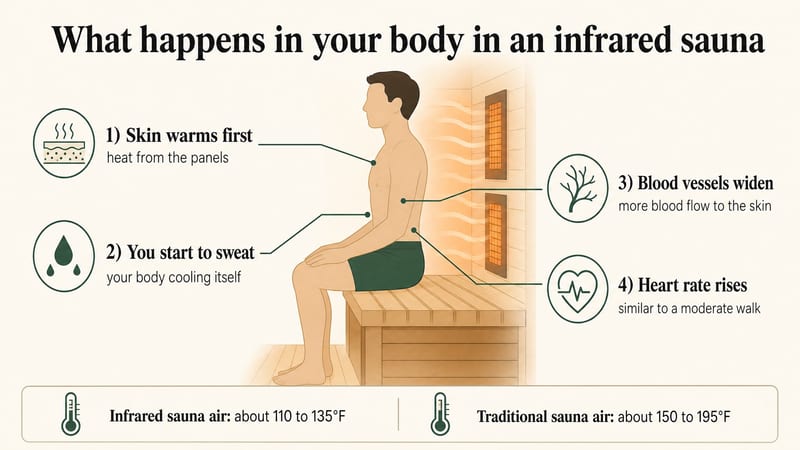
Both Cleveland Clinic and Northwestern Medicine make the same point: a sauna raises your heart rate, but it isn’t a substitute for exercise. Use it alongside your workouts, not instead of them.
Here are the five benefits I think are worth buying for, each with what the evidence says.
This is the benefit you feel from the first session. You get a proper sweat without breathing very hot air, and there’s no steam, so it feels dry and easy. Cleveland Clinic’s specialist calls infrared saunas “gentler and more comfortable” than traditional ones.
What the evidence says: solid. It follows from how the heaters work. In a 2015 study from the University of Jyväskylä, researchers described far infrared sauna bathing as “a very light loading for the body” and “a comfortable and relaxing experience”.
Twenty minutes of warmth, no phone, nothing to do. It’s an easy habit to keep when the sauna is a few steps away. Cleveland Clinic notes that many people find saunas relaxing and that some research suggests they may help reduce stress and lift mood.
What the evidence says: the feeling is common and well reported. The research on stress and mood is early, so I’d buy one for the habit, not for a measured result.
If you hike, run or lift, a session afterward is a pleasant way to warm up tired legs. Cleveland Clinic’s specialist says some people find it helps with post-workout soreness.
What the evidence says: small and mixed. In the Jyväskylä study, 10 active men sat in a far infrared sauna for 30 minutes after training. After a hard endurance session, their jump height 30 minutes later was slightly better than with no sauna. After strength training, there was no difference in any measure. It’s a pleasant routine after exercise, not a proven recovery tool.
This is where most of the headlines come from. The 2009 review in Canadian Family Physician found 9 relevant studies and rated the evidence for its main heart-related findings as “limited moderate”. Northwestern Medicine says infrared research “is mostly limited to small, short-term studies”.
What the evidence says: early, and not settled. Much of the stronger long-term data comes from traditional Finnish saunas, not infrared. As Northwestern Medicine puts it, many marketing claims “take information from traditional sauna data and may overstate expected benefits”. If heart health is your main reason, talk to your doctor before you buy.
This one isn’t in the studies, but it decides whether you’ll use it. Most of our 1 to 2 and 2 person infrared saunas plug into a standard 120V/15A outlet. Dynamic’s manual says its models take about 25 to 30 minutes to reach 115 to 120°F, and upkeep is a wipe-down with water. A sauna you can start after work in your basement gets used far more than one across town.
Two reviews give the clearest picture.
Here’s how the common claims stack up:
| Claim | What the studies show | My take |
|---|---|---|
| Relaxing, gentle heat | Consistent reports; lower air temperature than a traditional sauna | Real, and the main reason to buy |
| Heart and blood vessels | Small, short studies; “limited moderate” evidence | Early, not proven |
| Recovery after exercise | One small study, mixed results | A nice routine, not a tool |
| Stress and mood | Early research | Buy it for the habit |
| Cleansing the body | Not supported | Your liver and kidneys do this |
| Slimming | One study, rated weak | Don’t buy one for this |
| Lower cholesterol | Evidence against it | Not supported |
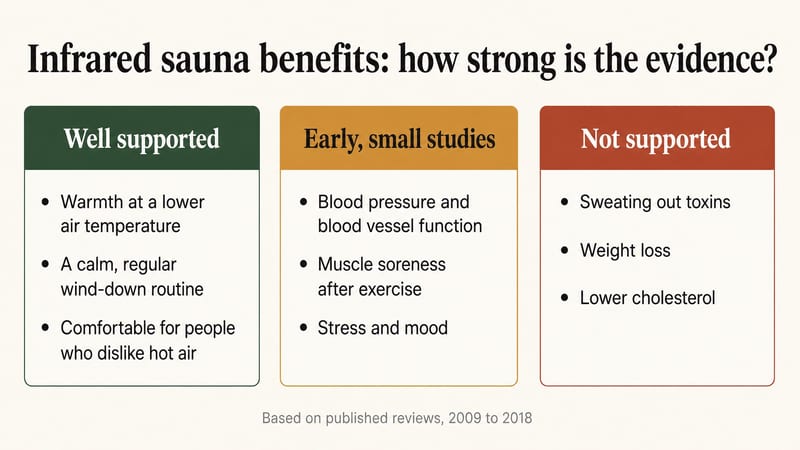
You’ll see these on a lot of sauna sites. Here’s why I don’t make them.
Infrared saunas are generally safe for healthy adults, but heat puts real load on your body. The International Commission on Non-Ionizing Radiation Protection (ICNIRP) advises people at risk from overheating, including those with heart and circulation conditions, to get a doctor’s advice before using an infrared cabin.
Check with your doctor first if you:
Get out straight away if you feel dizzy, sleepy or uncomfortable; Dynamic’s manual says the same. And skip the sauna after drinking alcohol.
Every infrared sauna we sell gives you the core benefits: dry, even warmth from heater panels at a lower air temperature. So choose on the things that make it easy to live with: size, power and EMF rating. You can compare it with a stove sauna in my infrared vs traditional sauna guide.
| Model | Seats | Floor space | Power | Heaters |
|---|---|---|---|---|
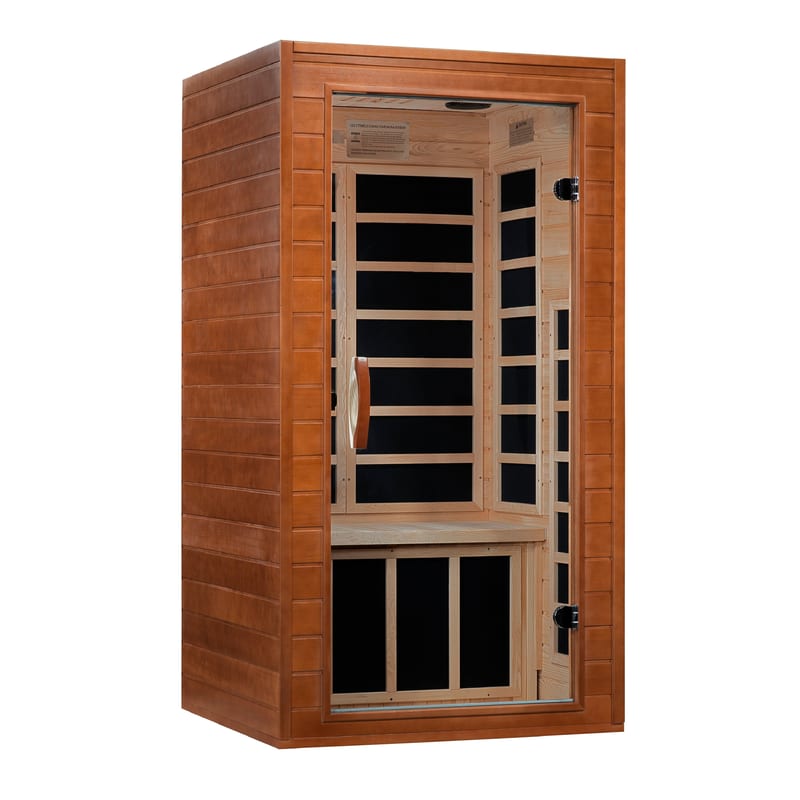
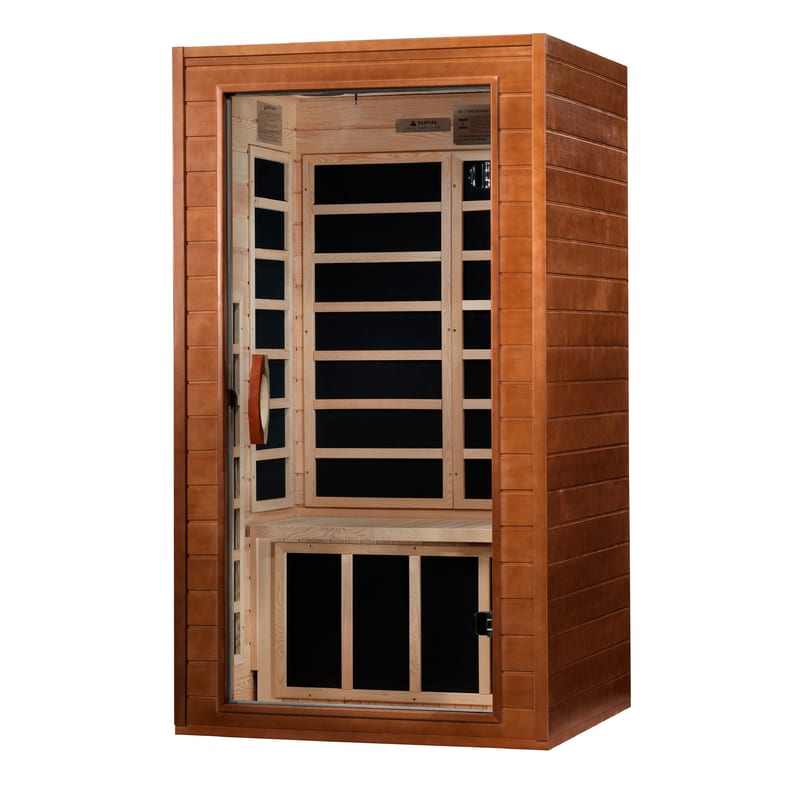
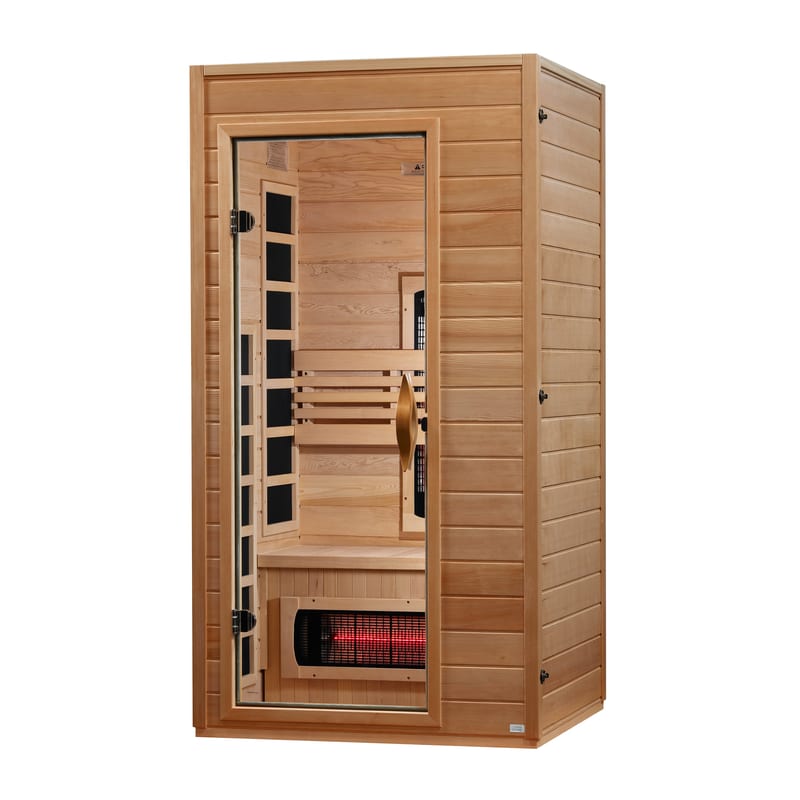
| Dynamic Avila | 1 to 2 | 39" x 36" | 120V/15A plug-in | 7 Low EMF carbon panels |
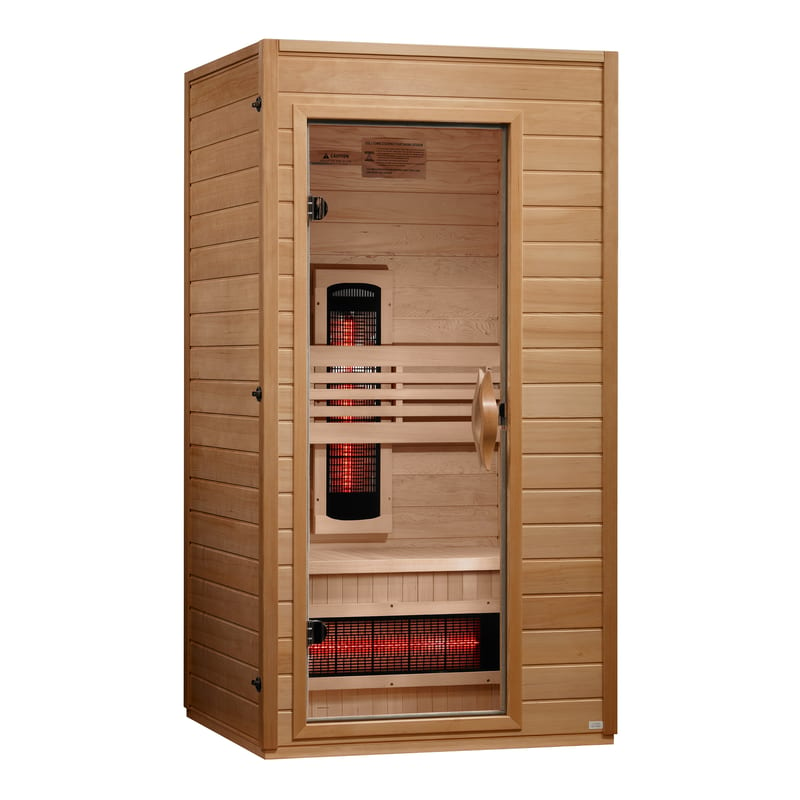
| Dynamic Martin | 1 to 2 | 39" x 36" | 120V/15A plug-in | 4 Near Zero EMF panels + 2 near infrared |
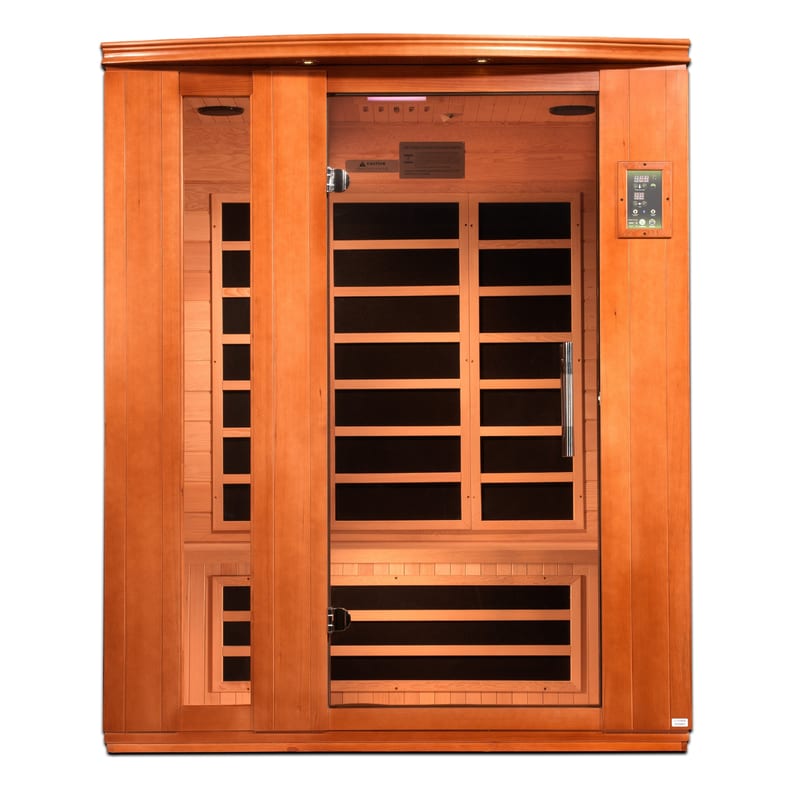
| Dynamic Santiago | 2 | 46" x 40" | 120V/15A plug-in | 7 Low EMF carbon panels |
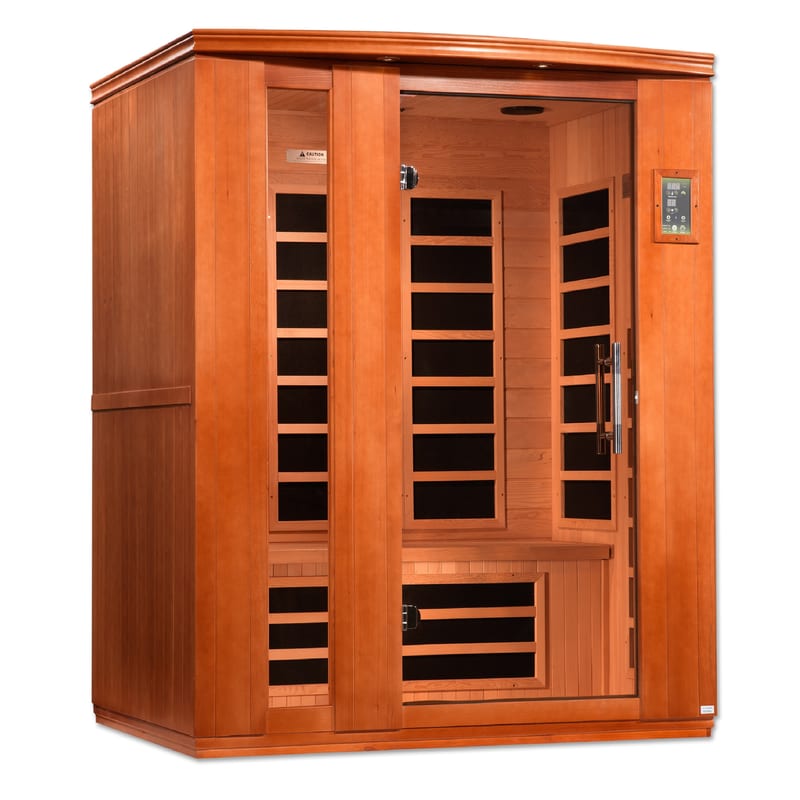
| Dynamic Lugano | 3 | 60" x 45" | Dedicated 120V/20A | 9 Low EMF carbon panels |
If EMF matters to you, our low EMF infrared saunas page lists every model by the maker’s rating. And if you’re still setting a budget, my guide to what a home sauna costs to buy and run covers it in real numbers.
Buy an infrared sauna for what it reliably gives you: gentle, dry warmth and a calm half hour that’s easy to keep up at home. Anything the research adds on top of that is a possible bonus, not a promise, and I’d be wary of any seller who tells you otherwise.
For most couples, I’d start with the Dynamic Santiago. It fits 46 by 40 inches, plugs into a standard 120V/15A outlet and has seven carbon panels. On your own, the Dynamic Avila does the same in 39 by 36 inches. If you want near infrared elements as well, plus a Near Zero EMF rating (under 3 mG at 2 to 3 inches), choose the Dynamic Martin. Not sure which fits your room or your outlet? Send me your measurements through our contact page and I’ll tell you honestly.
Best price guarantee. Find the same sauna for less at another authorized US retailer and we’ll match it. See how it works.
Yes, most people do. Cleveland Clinic suggests rinsing off afterward to wash away sweat and help you cool down comfortably. A lukewarm shower is fine. Drink water as well: you lose fluid through sweat, and Dynamic’s manual says to drink water before, during and after every session.
Partly. Both raise your heart rate and make you sweat. But most long-term research comes from traditional Finnish saunas, and Northwestern Medicine notes that infrared studies are mostly small and short-term. Infrared runs at a lower air temperature, which many people find more comfortable.
Not in any meaningful way. Northwestern Medicine calls sauna cleansing a myth: sweat carries only small amounts of waste, and your liver and kidneys do most of that work. Choose an infrared sauna for warmth and relaxation, not as a cleanse, and drink water to replace what you sweat out.
There’s no good evidence that it does, and we don’t claim it. Full spectrum saunas add near infrared elements to the carbon panels, and ours also carry the lowest EMF rating we sell, under 3 mG at 2 to 3 inches. Choose on heater layout, EMF rating, size, power and price.
Ask your doctor first. ICNIRP advises anyone at risk from overheating, including people with heart and circulation conditions, to get a doctor’s advice before using an infrared cabin. The same goes if you’re pregnant, take prescription medicines or have a heat-sensitive condition.
The research doesn’t name one. Pick a time you can keep up, since regular use is what makes a home sauna worth owning: many people like the evening to wind down, others go after a workout. Avoid it after drinking alcohol, and allow 25 to 30 minutes to warm up if you like to step into full heat.
Ethan Parker
Sauna Specialist
Ethan Parker is a home wellness expert with over a decade of experience in the consumer products industry. He founded the store with a simple mission: to make buying an indoor sauna transparent, straightforward, and stress-free. Whether he's breaking down the science of infrared heat or testing new models, Ethan provides honest, jargon-free advice to help families find their perfect fit. Outside of work, he is passionate about fitness, hiking, and building healthy, relaxing routines with his family.
Help me choose
Five quick questions about your room, your power and your budget. We'll show the saunas that fit best.
Shop the story
 Save 8%
Free shipping over $1,000
Saunas arrive by curbside freight, and the carrier calls ahead.
How delivery works